
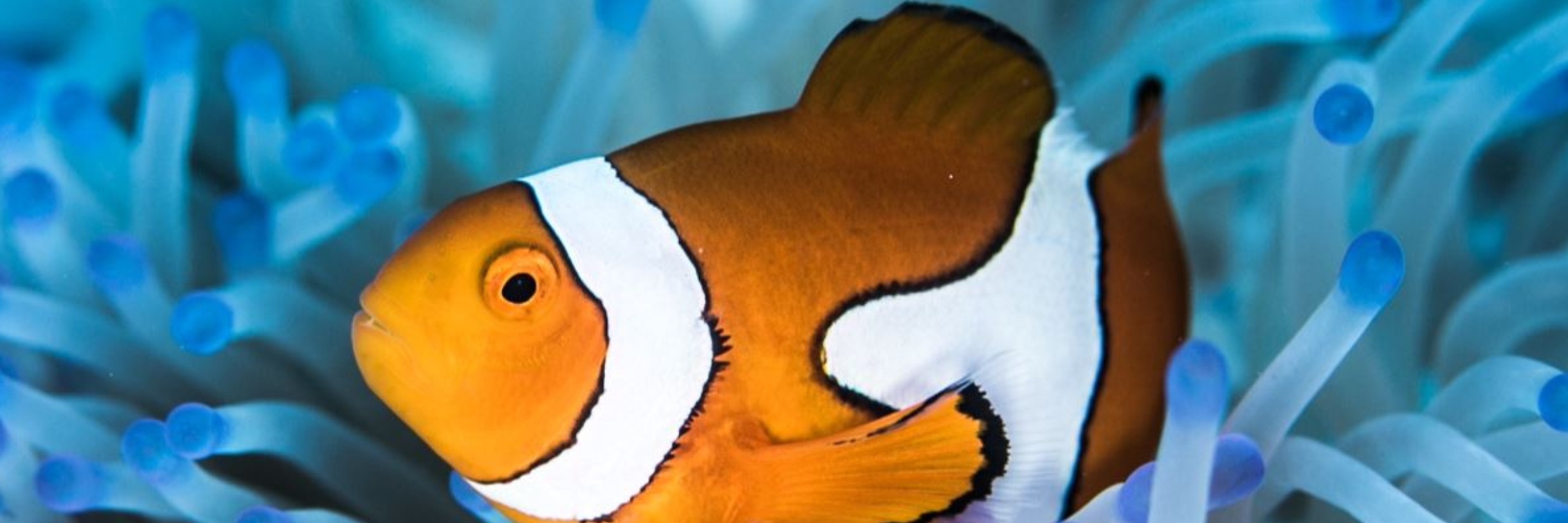
“People have crossed oceans just to see the clownfish in its anemone. It turns out it’s worth every kilometre.”
Clownfish of the Great Barrier Reef – The Reef’s Most Famous Fish
Quick Facts About the Clownfish Great Barrier Reef
-
- Scientific name: Amphiprion percula (Orange Clownfish )
- Also known as: Anemonefish
- Found in: Coral reefs and sea anemones
- Diet: Algae, plankton and small crustaceans
- Average size: 8–11 cm
- Lifespan: Up to 10 years in the wild
- Best chance of sighting: Shallow coral reefs while snorkelling
What Is a Clownfish?
The Clownfish Great Barrier Reef species is one of the most recognised and photographed reef fish in Australia. Famous for their bright orange bodies with white stripes, clownfish live in a unique partnership with sea anemones.
Unlike many reef fish, clownfish are highly territorial and rarely stray far from their host anemone. The stinging tentacles of the anemone protect them from predators, while the clownfish help clean debris and defend the anemone from other fish.
For many visitors exploring the reef, spotting a clownfish nestled among coral is a magical highlight of snorkelling the Great Barrier Reef.
→ Reef Fish Hub
→ Sea Anemones page
→ Great Barrier Reef Tours from Cairns
Scientific Classification
-
- Scientific Classification – Clownfish Great Barrier Reef
- Kingdom: Animalia
- Phylum: Chordata
- Class: Actinopterygii
- Order: Perciformes
- Family: Pomacentridae
- Genus: Amphiprion
- Species: Amphiprion percula
- Conservation Status: Least Concern (IUCN)
Scientific Name
Amphiprioninae (subfamily)
Common Names
-
- Primary common name: Clownfish
- Secondary common name: Anemonefish
- Regional or alternate names: Nemo fish, False clownfish (for Amphiprion ocellaris)
Taxonomic Rank
-
- Genus: Amphiprion
- Species: Amphiprion ocellaris (Common Clownfish)
Related Species
-
- Amphiprion percula (Orange Clownfish)
- Amphiprion clarkii (Clark’s Clownfish)
- Premnas biaculeatus (Maroon Clownfish)
Identification Notes
Clownfish are small, brightly coloured reef fish, typically orange with bold white bands outlined in black. They have a rounded body, a distinctive swimming style, and are almost always found nestled among the tentacles of sea anemones. Their vibrant colouring and close association with anemones make them one of the easiest reef fish to recognise.
Role on the Reef
Clownfish play an important symbiotic role on the reef by living in close partnership with sea anemones. They help keep the anemone clean, improve water circulation, and may even lure prey toward it, while gaining protection from predators among its stinging tentacles. This mutually beneficial relationship is one of the most well-known examples of cooperation in marine ecosystems.
Where Do Clownfish Live on the Great Barrier Reef?
The Clownfish Great Barrier Reef habitat includes shallow coral reef systems where sea anemones are present.
They are commonly found:
-
- Around coral bommies
- In lagoon reef systems
- On fringing reefs near islands
- In calm snorkelling sites
Popular locations where snorkellers often see clownfish include:
Because they remain close to their host anemone, once you find one, you’ll often see a pair or small family group.
→ Dive Site Directory
→ Cairns Reef Tours
→ Port Douglas Reef Tours
What Do Clownfish Eat?
Clownfish are omnivores. They feed on:
-
- Plankton
- Small crustaceans
- Algae
- Leftover food scraps from their anemone
Their diet contributes to reef balance by helping maintain algae levels around coral structures.
Can You See Clownfish on a Reef Tour?
Yes, the Clownfish Great Barrier Reef species is commonly seen on snorkelling tours.
Best chances:
-
- Shallow outer reef sites
- Calm lagoon areas
- Island fringing reefs
- Guided snorkelling tours with marine briefings
Clownfish are not dangerous and are safe to observe from a respectful distance. Touching marine life is never recommended.
Planning a reef trip?
Explore Great Barrier Reef Tours from Cairns and discover vibrant reef fish up close.
See them on a reef tour
Clownfish are commonly seen on outer reef snorkel trips, though sightings are never guaranteed.


Interesting Facts
-
- All clownfish are born male and can change sex during their lifetime.
- The dominant female is the largest fish in the group.
- Clownfish are immune to anemone stings due to a protective mucus coating.
- They rarely swim more than a few metres from their host anemone.
- Clownfish live in small hierarchical family groups.
- Their bright colours warn predators of their protected habitat.
- The Clownfish Great Barrier Reef population plays a role in maintaining anemone health.
Clownfish and Reef Conservation
While the Clownfish Great Barrier Reef species is currently listed as Least Concern, threats include:
-
- Coral bleaching
- Climate change
- Habitat loss
- Illegal aquarium trade
Protecting coral reefs protects clownfish. Marine park regulations and responsible tourism help maintain healthy reef ecosystems.
→ Reef Conservation page
→ Reef Safety page
→ Crown-of-Thorns Starfish
Animals Commonly Seen With Clownfish
Clownfish are often spotted alongside:
These species share similar coral habitats and contribute to the vibrant reef ecosystem.
Frequently Asked Questions – Clownfish Great Barrier Reef
Are clownfish common on the Great Barrier Reef?
Are clownfish dangerous?
Can clownfish really change gender?
Where is the best place to see clownfish on the Great Barrier Reef?
Do clownfish only live in anemones?
Discover
The Clownfish Great Barrier Reef experience is one of colour, curiosity and connection. These small but charismatic reef fish are often the first species snorkellers recognise, and the ones they remember most.
Ready to meet them?
Compare Reef Tours from Cairns and explore the Reef Animals Hub to discover more marine life.
Discover the Best of Australia’s Great Barrier Reef




A Hot Getaways destination. Where Care is Our Compass.
