
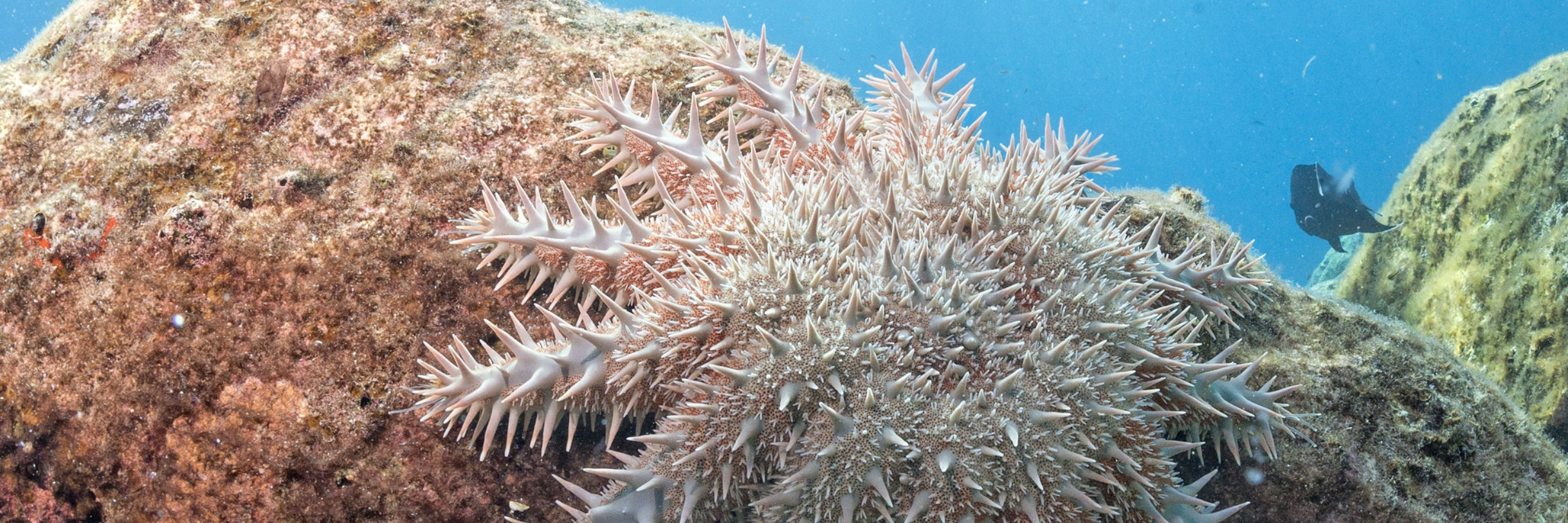
“The Crown-of-Thorns starfish is one of the reef’s most complex stories — a native predator with a natural role, that can become devastating when its numbers surge.”
Crown-of-Thorns Starfish – The Great Barrier Reef’s Most Controversial Predator
This page is part of our Great Barrier Reef Animals Hub, where you can discover the incredible marine life of the reef.
Great Barrier Reef Animals Hub
Quick Facts About the Crown-of-Thorns Starfish Great Barrier Reef
• Scientific name: Acanthaster planci
• Also known as: COTS
• Found in: Coral reefs across the Indo-Pacific
• Diet: Hard coral polyps
• Average size: 25–80 cm across
• Conservation status: Not endangered, but population outbreaks can occur
• Best chance of sighting: Outer reef coral areas
What Is a Crown-of-Thorns Starfish?
The Crown-of-Thorns Starfish Great Barrier Reef species is one of the most well-known coral predators found on the reef. This large starfish is covered in long venomous spines that resemble a crown of thorns, giving the animal its distinctive name.
Unlike many reef animals that feed on algae or plankton, crown-of-thorns starfish feed directly on living coral. They climb onto coral colonies and extend their stomach over the coral surface, digesting the coral tissue and leaving behind the white skeleton.
Although this may sound destructive, crown-of-thorns starfish are actually a natural part of reef ecosystems. In healthy numbers, they help maintain coral diversity by preventing fast-growing coral species from dominating the reef.
Scientific Classification
• Kingdom: Animalia
• Phylum: Echinodermata
• Class: Asteroidea
• Order: Valvatida
• Family: Acanthasteridae
• Genus: Acanthaster
• Species: Acanthaster planci
Conservation Status: Not listed as threatened.
The Crown-of-Thorns Starfish is managed within the Great Barrier Reef Marine Park through active monitoring and control programs.
Where Do Crown-of-Thorns Starfish Live on the Great Barrier Reef?
Crown-of-thorns starfish are found throughout coral reef systems across the Indo-Pacific region, including the Great Barrier Reef.
They typically live in:
• Outer reef slopes
• Coral-rich reef environments
• Shallow reef platforms
• Areas with abundant hard coral
These starfish are often difficult to see during the day because they hide within coral structures or under reef ledges. Divers sometimes spot them moving slowly across coral colonies at night while feeding.
Why Are Crown-of-Thorns Starfish Important?
They often attract attention during population outbreaks, but they also play an important natural role in reef ecosystems.
In balanced numbers, they:
-
- Help maintain coral diversity
- Prevent fast-growing corals from taking over
- Support a healthy mix of coral species
- Contribute to natural reef cycles
However, when populations increase rapidly, they can consume large areas of coral, which is why reef management programs monitor their numbers closely.
Are Crown-of-Thorns Starfish Dangerous?
Crown-of-thorns starfish should never be touched.
Their long spines contain venom that can cause:
-
- Sharp, painful puncture wounds
- Swelling and redness
- Nausea in some cases
For snorkellers and divers, the best approach is simple, look, don’t touch, and give these fascinating animals plenty of space.
What Causes Crown-of-Thorns Outbreaks?
From time to time, crown-of-thorns starfish populations increase dramatically. These events are known as outbreaks.
Possible causes include:
-
- Increased nutrients in the water (from runoff)
- Fewer natural predators
- Ideal breeding conditions
- Calm ocean conditions allowing larvae to survive
During outbreaks, reef management teams actively work to control numbers and protect coral reefs.
What Animals Are Associated With Crown-of-Thorns Starfish?
Although not commonly surrounded by fish like some reef animals, a few species interact with or prey on crown-of-thorns starfish.
These include:
-
- Giant Triton Snail – one of the few natural predators
- Pufferfish – may feed on smaller individuals
- Triggerfish – known to flip and attack them
- Some wrasse species – may pick at softer areas
These interactions are an important part of maintaining balance on the reef.
A Unique and Important Reef Species
One of the most unique animals on the Great Barrier Reef. While it can have a significant impact on coral during outbreaks, it is also a natural and important part of the reef’s ecosystem.
Understanding this species helps visitors appreciate the delicate balance of reef life and the importance of protecting this incredible natural wonder.
When you visit the reef, keep an eye out you may spot one tucked into the coral, playing its quiet but vital role in the underwater world.
FAQs
What does a crown-of-thorns starfish eat?
Are crown-of-thorns starfish bad for the reef?
Can crown-of-thorns starfish sting you?
How big do crown-of-thorns starfish grow?
Where can I see crown-of-thorns starfish?
Crown-of-Thorns Starfish – A Complex Part of Reef Life
The Crown-of-Thorns Starfish is one of the most fascinating and complex animals on the Great Barrier Reef. With its striking appearance and unique feeding behaviour, it plays a role that is both natural and, at times, challenging for the reef.
While population outbreaks can impact coral, these starfish are also part of the reef’s delicate balance, helping maintain diversity in healthy ecosystems. Their presence reminds us that the reef is a living, ever-changing environment where every species has a purpose.
When exploring the reef, spotting a crown-of-thorns starfish offers a deeper understanding of how nature works beneath the surface, not just the beauty, but the balance that keeps this incredible ecosystem alive.
Discover Great Barrier Reef Day Tours


A Hot Getaways destination. Where Care is Our Compass.
