
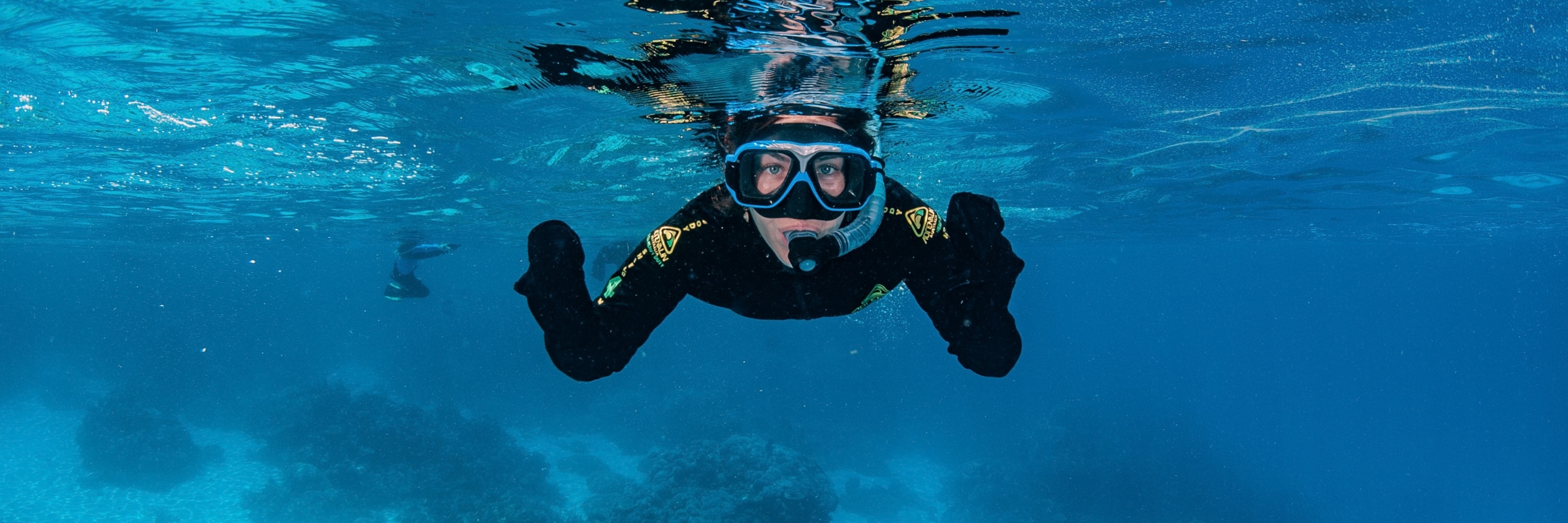
“The sea asks only that you learn her rhythms, come when she’s calm, prepare when she is wild, and she will always welcome you.”
Stinger Season — When to Take Extra Care in Tropical Queensland Waters
In short: Marine stinger season in tropical North Queensland runs roughly from November to May. It affects inshore and coastal beaches far more than the outer Great Barrier Reef, and it is managed rather than avoided: stinger suits, netted enclosures and operator protocols mean reef trips run normally all season.
This page answers: When stinger season is, which animals it involves, how much it actually affects a reef trip, what happens at mainland beaches, a month-by-month picture, and what to do if someone is stung.
Season dates and first aid on this page follow Surf Life Saving Queensland and Queensland Health, both linked and verified on 1 August 2026.
If you’re planning a Great Barrier Reef holiday and have heard the term “stinger season,” you’re right to want to understand it. Tropical North Queensland experiences a marine stinger season each year, roughly from November through to May, the warmer summer months when box jellyfish and irukandji jellyfish are at their most prevalent near inshore and coastal waters. Understanding when it happens, what it means for your visit, and how reef tour operators manage it will help you plan your holiday with complete confidence.
What Is Stinger Season?
Stinger season refers to the period when box jellyfish (Chironex fleckeri) and irukandji jellyfish are most commonly found in the shallow inshore waters of tropical Queensland. Box jellyfish and irukandji are the two species Surf Life Saving Queensland classes as dangerous tropical marine stingers. A box jellyfish sting can cause severe pain and, in rare cases, cardiac arrest. Irukandji, while tiny (about the size of a thumbnail), can cause a delayed syndrome including severe pain, nausea, and high blood pressure.
Both species are most active in warm, calm, inshore waters during summer, typically from November to May. Box jellyfish are far less common on the outer reef, where most reef tours go, but Irukandji can occur around the reef and islands too, so wear the stinger suit your tour provides. Surf Life Saving Queensland records box jellyfish stings predominantly in coastal rather than offshore waters.
Does Stinger Season Affect Reef Tours?
This is the most important thing to understand: stinger season primarily affects inshore beaches and estuaries, not the outer Great Barrier Reef. The vast majority of reef day tours depart from Cairns or Port Douglas and travel 45 to 90 minutes offshore to the Outer Reef, where stinger risk is considerably lower. Most liveaboard vessels operate on the outer reef, where box jellyfish are rarely encountered. Irukandji risk is lower there but not zero, so wear a stinger suit in season.
That said, all reputable reef tour operators provide stinger suits (also called lycra suits or dive skins) for snorkellers and divers during stinger season at no extra cost. These lightweight full-body suits form a physical barrier against stings and are highly effective. Wearing one is strongly recommended during stinger season, and most operators will encourage it.
What About Swimming at Beaches During Stinger Season?
Patrolled beaches through tropical north Queensland, including the Cairns northern beaches, deploy stinger enclosures at popular swimming spots during stinger season. These nets greatly reduce the risk from box jellyfish within a defined area, but they are not 100% stinger-proof and cannot keep out the much smaller Irukandji, so wear a stinger suit as well. Outside of netted areas, swimming at inshore beaches during stinger season carries genuine risk and is not recommended without a full stinger suit.
The good news for reef travellers: your reef tour takes you well away from these inshore risk zones. You will swim in the open ocean above a coral reef, a very different environment to a calm estuarine beach.
Seasonal Summary — Month by Month
November through January sees the height of stinger season, coinciding with wet season heat and calm inshore conditions. February and March continue the risk period, with some of the warmest ocean temperatures. Stinger risk usually eases towards the end of the season, but stingers can be present in any month. June through October sits outside the higher-risk period and coincides with the dry season, generally the most popular and easiest time to visit the reef. Importantly, Surf Life Saving Queensland notes that marine stingers may be present in tropical Queensland waters at any time of year, so the season is a guide to risk rather than a guarantee of absence. Stinger suits are still provided by operators in the cooler months as a precaution, and many visitors choose to wear them year-round for sun protection.
Stay Safe — Our Recommendations
Always wear the stinger suit provided by your tour operator during stinger season. If you are swimming at an inshore beach during summer, stay within the netted enclosures. Seek immediate medical attention if stung: box jellyfish stings are a medical emergency and you should call Triple Zero (000). The immediate action for a suspected box jellyfish or Irukandji sting is to get the person out of the water, call 000, start CPR if they are unresponsive and not breathing normally, and pour vinegar over the sting for at least 30 seconds before removing tentacles. A bluebottle sting is different and is treated with hot water, not vinegar. Those are summaries only: Surf Life Saving Queensland and Queensland Health publish the complete guidance, and you should follow their instructions and those of emergency services rather than this page. The correct response differs by species and getting it wrong matters. Know that the outer reef is a much safer environment than inshore waters, and your licensed reef tour operator has strict safety protocols in place. The reef is magnificent in every season, with the right preparation, stinger season is no barrier to an extraordinary experience.
More Questions About Stinger Season
Should I change the dates of my trip to avoid stinger season?
Almost certainly not. Stinger season overlaps with the wet season, so the weather is a bigger consideration than the stingers for most visitors. Reef tours operate throughout the season with stinger suits provided, and the outer reef is a much lower-risk environment than an inshore beach. Choose your dates on weather, crowds and price, and treat the stinger suit as standard equipment.
Are the beaches closed during stinger season?
No. Patrolled beaches in the region operate netted stinger enclosures during the season, and lifesavers advise swimming inside the enclosure and between the flags. Surf Life Saving Queensland is the authority on which beaches are patrolled and when, and its North Queensland safety page is the place to check before you swim.
Do operators charge extra for stinger suits?
Practice varies. Many operators include suits at no charge during the season and some hire them for a small fee. It is worth confirming at the time of booking rather than on the morning of the trip, and it is a fair question to ask any operator directly.
Sources and Further Reading
Every figure on this page comes from one of the sources below. We link to the source rather than paraphrase it so that you can check our work.
- Surf Life Saving Queensland — Marine Stingers — The authority on marine stinger season dates, species and first aid in Queensland. Confirms the season typically runs November to May and that stingers may be present year-round.
- Surf Life Saving Queensland — North Queensland Beach Safety — Stinger suits, netted enclosures, swimming between the flags and other advice written specifically for tropical North Queensland beaches.
- Queensland Health (Queensland Government) — Bites and Stings — State health authority first aid guidance, including the use of vinegar for suspected Irukandji and box jellyfish stings.
Every source above was opened and confirmed live on 1 August 2026. These pages are maintained by the organisations that publish them and will always be more current than this page. If you find something here that is out of date or wrong, please tell us so we can correct it.
A Hot Getaways destination. Where Care is Our Compass.
FAQs
When is stinger season on the Great Barrier Reef?
Can I still visit the reef during stinger season?
Are stingers found on the outer Great Barrier Reef?
What is a stinger suit and do I need one?
What should I do if I am stung by a jellyfish?
Marine stinger information on this page is drawn from Surf Life Saving Queensland and was last verified on 31 July 2026.
