
“Look up on the reef — the sky is as full of life as the water. Terns, boobies, frigatebirds, ospreys — the seabirds of the Great Barrier Reef are spectacular.”
Seabirds of the Great Barrier Reef – A Guide to Reef Island Birds
Key Facts About Seabirds of the Great Barrier Reef
More than 20 seabird species breed on islands and coral cays across the Great Barrier Reef
Coral cays and reef islands provide essential breeding habitats
Seabird colonies help maintain island ecosystems through nutrient cycling
Many seabirds feed on fish and squid near the ocean surface
Some species migrate thousands of kilometres across oceans
Reef tours often provide wonderful birdwatching opportunities
Seabird colonies are fragile and must be protected from disturbance
The Birds of the Reef
When most people imagine the Great Barrier Reef, they think of colourful coral, turtles and tropical fish. But if you look to the skies above the reef islands, another extraordinary part of the ecosystem comes into view, the seabirds.
From powerful White-bellied Sea Eagles soaring along the coastline to graceful Crested Terns resting on coral cays, seabirds are an important part of reef life.
These birds hunt over the open ocean, nest on remote islands and bring vital nutrients back to fragile coral cay ecosystems. Their presence tells an important story: the reef is alive, connected and thriving.
Seabirds You May See on the Great Barrier Reef
Many remarkable bird species live and breed across the reef’s coral cays and islands. Explore some of the most commonly seen seabirds below.
White-bellied Sea Eagle
A powerful coastal raptor often seen soaring above reef lagoons and islands.
→ Read the White-bellied Sea Eagle Guide
Osprey
Specialised fish hunters frequently spotted near reef islands and navigation towers.
→ Read the Osprey Guide
Brown Booby
Large diving seabird that nests on remote coral cays across the Great Barrier Reef.
Frigatebird
Magnificent ocean gliders with enormous wingspans that soar effortlessly above the reef.
→ Read the Frigatebird Guide
Crested Tern
One of the most commonly seen seabirds resting on pontoons, coral cays and reef boats.
→ Read the Crested Tern Guide
Where to See Seabirds on the Great Barrier Reef
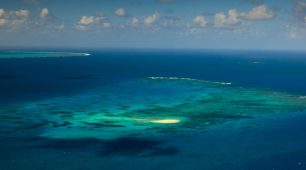
Coral cays are among the most important seabird habitats on the Great Barrier Reef. These tiny islands provide safe nesting areas away from predators.
Top Hotspots
Michaelmas Cay
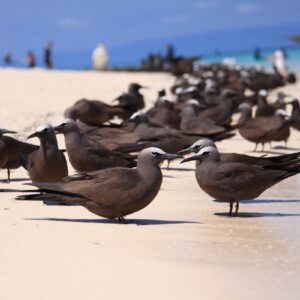
One of the Reef’s most important seabird breeding sites. Up to 20,000 pairs of seabirds have been recorded nesting here, and numbers vary from year to year.
Lady Elliot Island
A haven for birds including noddies, boobies and terns.
Heron Island
A favourite destination for birdwatchers with large nesting colonies.
A picturesque coral cay with smaller seabird populations and beautiful reef flats.
East Fairfax and East Hoskyn Islands
Protected breeding grounds in the Capricornia Cays National Park.
You can explore many of these reef locations in our Dive Site Directory.
See seabirds at Michaelmas Cay
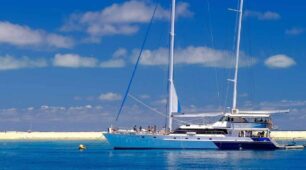
Ocean Spirit Cruises sails from Cairns to Michaelmas Cay, one of the most important seabird nesting sites on the reef.
Why Seabirds Are Important to the Reef
Seabirds play a vital ecological role in maintaining the health of reef islands and surrounding marine ecosystems.
Their droppings fertilise coral cay vegetation
This supports plant growth that stabilises fragile islands
Scientists monitor seabird populations to understand reef health
Migratory birds connect the reef to global ecosystems
Seabirds help maintain balance in marine food chains
Protecting seabirds helps protect the entire reef ecosystem.
Learn more about reef protection in our Reef Conservation Guide.
Responsible Wildlife Viewing
Visitors can help protect seabirds while exploring the reef.
Follow these simple guidelines:
Use zoom lenses instead of approaching nests
Stay quiet near nesting colonies
Never fly drones near seabirds
Use reef-safe sunscreen
Choose eco-certified reef tours
Always take rubbish home
You can read more advice in our Reef Safety Tips guide.
Learning about reef animals in class? We help schools, universities and study groups plan educational trips to the Great Barrier Reef. Depending on the program, groups can enjoy guided snorkelling and marine biology presentations.
Great Barrier Reef Educational Groups →
Frequently Asked Questions
How many seabird species live on the Great Barrier Reef?
What is the best time to see seabirds nesting?
Where are the largest seabird colonies?
Can visitors see seabirds on reef tours?
Why are seabirds important to coral cays?
Discover the Seabirds of the Great Barrier Reef
Seabirds are one of the most beautiful and fascinating parts of the Great Barrier Reef ecosystem. Watching them glide above turquoise waters or gather on coral cays adds another layer of wonder to every reef visit.
Whether you are exploring reef islands, snorkelling vibrant coral gardens or simply enjoying a day at sea, take a moment to look to the skies — you may discover one of the reef’s incredible seabirds soaring overhead.
Explore more reef wildlife and experiences:
→ Compare Reef Tours
→ Reef Animals Hub
Discover Australia’s Great Barrier Reef




A Hot Getaways destination. Where Care is Our Compass.