
“Knowing the risks is how you protect the wonder. A prepared visitor is a safe visitor — and an honest guide doesn’t leave this out.”
Bluebottle (Physalia) Stings – What Every Reef Visitor Needs to Know
In short: Bluebottles are a beach animal, not a reef one. They wash up on mainland beaches on onshore winds, the sting is painful but not usually dangerous, and the treatment is hot water — not vinegar. They are rarely encountered at outer reef sites.
This page answers: What a bluebottle is, where and when you are likely to meet one, why the first aid is different from a box jellyfish sting, what not to do, and when a sting needs medical attention.
First aid on this page summarises Surf Life Saving Queensland and Queensland Health guidance and links to both. Verified 1 August 2026.
The immediate action for a bluebottle sting. Do not rub the area. Remove any tentacles still stuck to the skin, rinse well with sea water rather than fresh water, then put the stung area in hot water — no hotter than you can comfortably tolerate — for 20 minutes. If heat is unavailable or the pain is not relieved by it, use a cold pack or ice in a dry plastic bag. Seek medical help if symptoms persist.
Bluebottle stings are painful but are not in the same category as a box jellyfish or Irukandji sting. If you are in tropical Queensland and are not certain which animal was involved, treat it as a tropical sting: call 000 and use vinegar. Follow the instructions of emergency services and the current guidance of the recognised authorities — Surf Life Saving Queensland and Queensland Health. Everything below is a summary of their guidance, not a replacement for it.


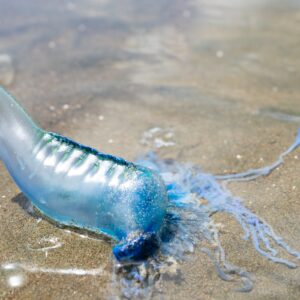

What visitors need to know about these common Australian jellyfish.
Bluebottle Quick Facts
- Bluebottle are common on mainland surf beaches, carried in by wind and swell.
- They are not tropical stingers and are rare on the Great Barrier Reef.
- Stings can be painful but are normally not dangerous.
- First aid is different from Box Jellyfish and Irukandji.
- Treatment: Hot water, not vinegar.
- Appear most often after onshore winds or northerlies.
- If pain persists or symptoms worsen, seek medical help.
About Bluebottle
Bluebottles (Physalia) sometimes called “Portuguese man o’ war” are one of the most familiar jellyfish-like creatures found along Australia’s east coast. They are common on open surf beaches and may wash ashore in large numbers after certain weather conditions.
They are not considered tropical marine stingers like Box Jellyfish or Irukandji, and they are rarely found at Great Barrier Reef sites visited on tours. Stings are painful but usually manageable with correct first aid.
This page explains how to identify bluebottles, where they are found, what to do if someone is stung, and how they differ from dangerous tropical stingers.
What Are Bluebottles?
Bluebottles are not a single jellyfish but a colony of specialised organisms working together. The bright blue float (the “bottle”) sits on the surface while long tentacles trail behind.
Key features:
-
- Bright blue float
- Long, fine tentacles
- Found on surf beaches (not reef lagoons)
- Move with wind and swell
- Can sting even when washed ashore
Where and When Are Bluebottles Found?
Bluebottles are usually found on open-coast beaches, especially after:
-
- Onshore winds
- Strong northerlies in summer
- Increased swell
- Stormy or unsettled seas
They’re not typical inside reef lagoons, reef platforms, coral cays, Green Island, Fitzroy Island, or outer reef tour sites.
Most tour operators rarely encounter bluebottles at the reef, but visitors often ask about them.
Bluebottle First Aid – Visitor Guide
1. Remove tentacles carefully
Use seawater to help loosen tentacles. Gently lift off remaining tentacles with your fingertips or a towel.
2. Rinse with seawater only
Avoid freshwater initially, it can trigger more stinging.
3. Apply heat
Immerse the stung area in hot water for 20 minutes. Surf Life Saving Queensland describes the right temperature simply as no hotter than the person helping can comfortably tolerate — that test matters more than any number, because scalded skin on top of a sting helps nobody. A warm shower is a good alternative.
4. Cold pack only if heat is unavailable
Heat works best, but cold can help if nothing else is available.
5. Seek medical care if needed
If pain is severe, the sting covers a large area, or symptoms persist.
Seven Key Things Visitors Should Know
-
- Bluebottles are mostly found on surf beaches, not on reef tours.
- Stings are painful but usually not dangerous.
- Tentacles can still sting after they detach.
- Hot water provides the best pain relief.
- Do not use vinegar (it can worsen pain).
- Stinger suits protect your body on reef tours they also block tentacles.
- Always ask a lifeguard if unsure; they handle bluebottle events regularly.
What Not to Do
-
- Do not rub the sting area
- Do not apply vinegar (this is for tropical stingers only)
- Do not apply alcohol or methylated spirits
- Do not use freshwater initially
When to Get Medical Help
Seek help if:
-
- Pain is severe or lasts more than one hour.
- The sting covers the face, throat or large areas
- The person is very young or older people
- There are signs of allergic reaction (breathing difficulty, swelling, hives)
Bluebottle vs Tropical Stingers
This section helps visitors understand the difference clearly.
| Jellyfish Type | Found | First Aid | Danger Level |
|---|---|---|---|
| Bluebottle | Surf beaches | Hot water | Low–Moderate |
| Box Jellyfish | Tropical waters (nearshore) | Vinegar + 000 | Very High |
| Irukandji | Tropical waters | Vinegar + 000 | High |
? FAQs
Are bluebottles dangerous?
Are they found on the Great Barrier Reef?
Can stings happen out of the water?
Do stinger suits protect against bluebottles?
Should I cancel my reef trip if bluebottles are on the beach?
Conclusion
Bluebottles are a normal part of Australian beach life, especially after onshore winds. While stings can be uncomfortable, the right treatment hot water offers quick relief. Visitors to the Great Barrier Reef can feel reassured that bluebottles are rarely found at reef tour locations, and operators provide protective suits, safety briefings, and expert guidance to keep everyone safe.
Reef Safety Hub

More Questions About Bluebottles
Why is hot water used for a bluebottle sting but vinegar for a box jellyfish sting?
They are different animals with different stinging cells. Vinegar deactivates the nematocysts of tropical box jellyfish and Irukandji; on a bluebottle it does not help and may make things worse. Hot water helps break down bluebottle venom and relieves pain. Getting this the wrong way round is the single most common first-aid mistake on Queensland beaches, which is why Surf Life Saving Queensland publishes separate procedures for each.
If I am not sure what stung me, what should I do?
In tropical Queensland, treat it as a tropical sting: get out of the water, call 000, and use vinegar. The consequences of treating a box jellyfish sting as a bluebottle are far worse than the reverse. Bluebottle tentacles are distinctive — blue, adherent and usually still visible on the skin — but do not spend time identifying anything if the person is unwell.
Do bluebottles turn up on the outer Great Barrier Reef?
Rarely. Bluebottles are surface drifters pushed onshore by wind, so they concentrate along mainland beaches rather than at pontoons and reef sites tens of kilometres offshore. If bluebottles have been reported at Cairns or Palm Cove beaches, that has very little bearing on an outer reef trip the same day.
Sources and Further Reading
Every figure on this page comes from one of the sources below. We link to the source rather than paraphrase it so that you can check our work.
- Surf Life Saving Queensland — Marine Stingers — Species description, distribution and the official bluebottle first aid sequence, including the hot water immersion and the cold pack fallback.
- Surf Life Saving Queensland — North Queensland Beach Safety — Beach safety guidance for tropical North Queensland: swimming between the flags, stinger enclosures and stinger suits.
- Queensland Health (Queensland Government) — Bites and Stings — The state health authority on first aid for bites and stings, including when a sting needs medical assessment.
Every source above was opened and confirmed live on 1 August 2026. Marine sting first aid is periodically reviewed. If this page and an authority disagree, the authority is correct and we are out of date — please let us know.
A Hot Getaways destination. Where Care is Our Compass.