
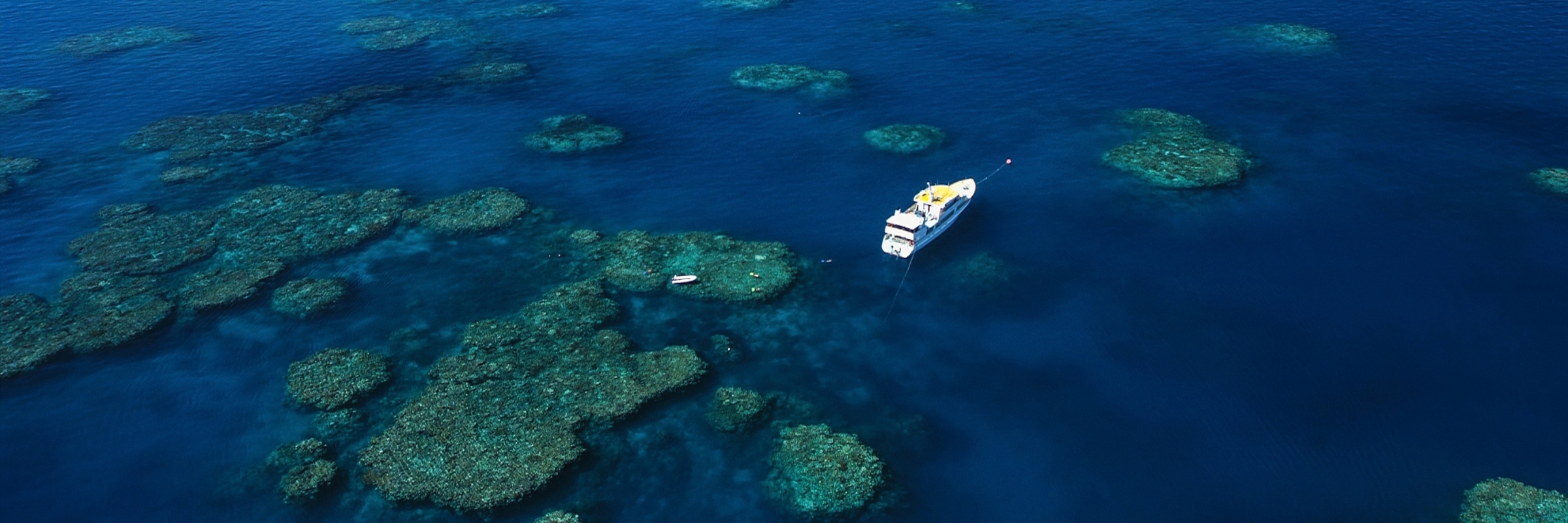
“The Coral Sea is where the Great Barrier Reef hands you over to the deep blue — a place of walls, sharks, visibility so clear it rearranges your sense of scale, and a silence that only the open ocean knows.”
The Coral Sea — Australia’s Premier Advanced Dive Destination
Beyond the outer edge of the Great Barrier Reef, the seabed drops away into the deep blue of the Coral Sea — a vast oceanic wilderness that is home to some of the most spectacular diving in the southern hemisphere. Accessed only by liveaboard from Cairns, the Coral Sea offers extraordinary visibility (often 40 metres or more), dramatic underwater topography, large pelagic marine life, and sites that remain genuinely remote and pristine. It is not for everyone — these are multi-day liveaboard expeditions into offshore territory. But for experienced divers who want to push beyond the reef and encounter the ocean at its most elemental, the Coral Sea is extraordinary.
What Makes Coral Sea Diving Different
The Great Barrier Reef offers shallow to mid-depth coral reef diving with extraordinary biodiversity — fish life, coral gardens, bommies, and reef walls. The Coral Sea offers something complementary but distinct. Visibility is routinely exceptional, reaching 30–50 metres on calm days. The topography is more dramatic — steep walls, pinnacles, and seamounts that plunge into dark blue water. The marine life tilts toward the pelagic: grey reef sharks, silvertip sharks, hammerheads, potato cod, giant trevally, and schools of barracuda are common encounters at sites like Osprey Reef, Holmes Reef, Bougainville Reef, and Steve’s Bommie.
Osprey Reef is the crown jewel of Coral Sea diving — a remote atoll approximately 350 kilometres northeast of Cairns, featuring The North Horn (a shark dive site of legendary status), massive coral walls, and consistently excellent visibility. Spirit of Freedom and other liveaboard operators run dedicated Coral Sea expeditions, typically of 7 nights or more.
How to Get There
The Coral Sea is unreachable by day trip. A liveaboard expedition is the only way to experience these sites — and the crossing from Cairns to the outer Coral Sea reefs typically takes 8–18 hours depending on the destination. Most Coral Sea liveaboards operate 5–10 day itineraries that combine Ribbon Reef sites with Coral Sea atolls, giving passengers a breadth of experience across both systems. Vessels depart from Cairns, and must carry all provisions for the voyage — the remoteness is part of the experience.
Who Is Coral Sea Diving For?
Coral Sea diving is best suited to experienced open water and advanced open water divers who are comfortable with deeper dives, strong currents, and open ocean conditions. Many sites are beyond recreational depth limits, making technical diving certifications valuable for those who want to explore the deeper structures. That said, some of the most spectacular Coral Sea encounters — particularly at Osprey Reef’s lagoon and the upper walls — are well within recreational dive limits and accessible to competent open water divers with good buoyancy skills.
Planning Your Coral Sea Liveaboard
The best season for Coral Sea liveaboards runs from June to October — calm conditions, excellent visibility, and comfortable temperatures. July and August offer the combination of dwarf minke whale season on the Ribbon Reefs and superb Coral Sea conditions, making a combined itinerary particularly rewarding. Book well in advance — these expeditions are popular with dedicated divers and places fill months ahead.
A Hot Getaways destination. Where Care is Our Compass.
Coral Sea liveaboards you can book
Spirit of Freedom runs dive expeditions from Cairns to Osprey Reef in the Coral Sea.


Frequently Asked Questions
What is a Coral Sea liveaboard?
Where is the Coral Sea?
What makes Coral Sea diving special?
Is Coral Sea diving suitable for beginners?
How long are Coral Sea liveaboard trips?
