
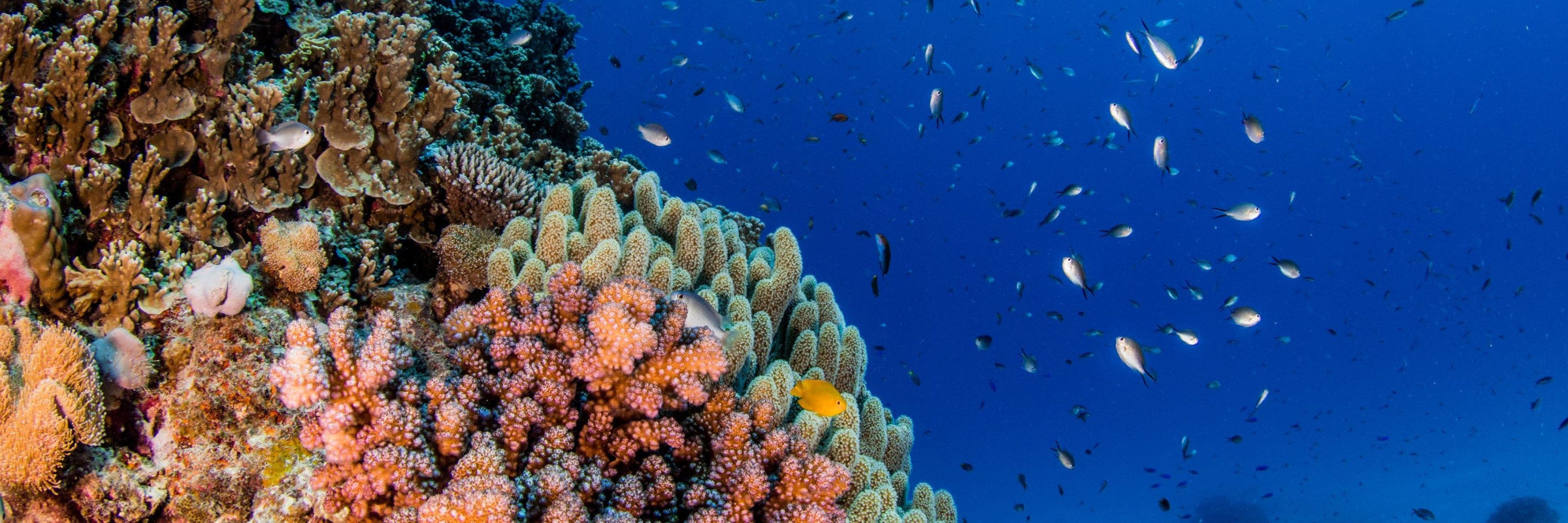
“The Great Barrier Reef is calling — and we’re here to help you answer it. Tours for every ability, every budget, every timeline.”
Choosing the right Great Barrier Reef tour comes down to three things: where you’re departing from, what kind of day you want on the water, and who you’re booking with. We work with trusted local operators across Cairns, Port Douglas and the Whitsundays. Check availability and book online, with prices shown up front.
Book a Great Barrier Reef Tour
Start with where you are staying. Each region has its own reef trips, and these are popular choices to compare.
Cairns Reef Tours


Port Douglas Reef Tours


See all Port Douglas reef tours →
Whitsundays Reef Tours



See all Whitsundays reef tours →
Australian owned and operated, based in Cairns. Prices shown are the lowest adult fares listed on 7 October 2026 and can change. The booking page always shows the current price. We do not add a booking fee.
Great Barrier Reef Tours at a Glance
In short: Most Great Barrier Reef tours are day trips leaving Cairns, Port Douglas or the Whitsundays. The main choice is between a fast catamaran to the outer reef, a stable pontoon platform, a closer island, or a sailing boat, and that choice matters more than the operator’s brand. Expect roughly 90 minutes to two hours each way to the outer reef, and expect an environmental management charge on top of the fare.
This page answers: where reef tours depart from, the difference between the main types of trip, what a reef day genuinely costs once the charges and extras are counted, what happens if the weather cancels your trip, and how to judge an operator without relying on advertising.
How we compare operators: we do not rank operators by what they pay us. Where this page describes a difference between trips, it is a difference a visitor would notice on the day.
- A Bucket-List Experience. The Great Barrier Reef is the world’s largest coral reef system, offering all travellers unforgettable snorkelling, scuba diving, and scenic tours.
- Snorkelling and Diving for All Skill Levels. Whether you’re a beginner snorkeller or a certified diver, there are tours to suit everyone, with expert guides.
- Outer Reef and Island Adventures. Visit the Outer Great Barrier Reef for its vibrant coral gardens, or explore tropical islands like Green Island and Fitzroy Island, where the reef meets the rainforest.
- Pontoon Tours for Ultimate Comfort. Floating reef pontoons provide a relaxed and family-friendly experience, with snorkelling, glass-bottom boat tours, underwater observatories, and even semi-submersible rides.
- Luxury Sailing & Small Group Tours. For a more intimate experience, opt for a catamaran or luxury sailing tour. Tours often include gourmet meals and peaceful reef locations away from the crowds.
- Scenic Helicopter and Seaplane Flights. Take your reef experience to new heights with an aerial tour, offering breath taking views of Heart Reef, coral lagoons, and the turquoise waters of the reef.
- Tours Depart from Cairns, Port Douglas and More. With day tours and liveaboard experiences departing from Cairns, Port Douglas, and Airlie Beach, it’s easy to find a reef tour that fits your itinerary.
Reef Tours by Region
Cairns Reef Tours
Cairns is the most popular departure point for the Great Barrier Reef, with daily trips to the outer reef, Green Island and Fitzroy Island. Most tours run 6–8 hours and include snorkelling gear, lunch and a marine biologist guide. Compare Cairns reef tours, or browse the wider Cairns tours and activities guide.
Port Douglas Reef Tours
Port Douglas gives faster access to some of the reef’s healthiest outer sections, including the Agincourt Ribbon Reefs. It’s the pick for travellers who want fewer crowds and clearer water. Compare Port Douglas reef tours.
Whitsundays Reef Tours
From the Whitsundays, reef tours often combine Whitehaven Beach and the Hardy Reef pontoon in a single day — a strong option if you want reef and beach in one trip. Compare Whitsundays reef tours, or plan the wider trip with the Whitsundays tours guide.
Reef Tours by Experience
- Snorkelling Tours — No experience needed. Full gear and guided instruction included on every trip.
- Scuba Diving Tours — Certified and introductory dives available; no certification required for intro dives.
- Liveaboard Tours — Multi-day trips reaching further offshore reefs unreachable on day trips.
- Family Pontoon Tours — Stable platforms with semi-submersibles and underwater observatories — the easiest option with young kids or non-swimmers. See all family reef tours and reef pontoons.
Types of Great Barrier Reef Tours
1. Snorkelling and Scuba Diving Tours
One of the best ways to experience the Great Barrier Reef is by in the water and exploring the colourful coral gardens up close. Full-day and half-day snorkelling and diving tours take you to incredible reef sites where you can swim alongside tropical fish, sea turtles, and even reef sharks. Popular destinations include Agincourt Reef, Norman Reef, and Flynn Reef. Many tours cater to all experience levels, offering introductory dives for beginners and certified dives for experienced divers.
2. Outer Reef Pontoon Experiences
For a comfortable and family-friendly reef adventure, consider a tour of a floating pontoon on the Outer Great Barrier Reef. These spacious platforms offer easy access to snorkelling, semi-submersible boat rides, underwater observatories, and glass-bottom boat tours—perfect for those who prefer to stay dry while still experiencing the magic of the reef!
3. Island Getaways—Green Island and Fitzroy Island
For those who love the combination of reef and rainforest, island day trips are a fantastic option. Tours to Green Island, Fitzroy Island, and Lady Elliot Island allow you to explore secluded beaches, lush rainforest walking trails, and coral reefs right off the shore. These tours are perfect for families and travellers who want a relaxing day in paradise with various activities.
4. Luxury Sailing and Catamaran Tours
If you’re looking for a more relaxed and scenic way to explore the reef, a luxury sailing tour is the perfect choice. Enjoy cruising through the turquoise waters, stopping at pristine reef sites for snorkelling and swimming. Many sailing tours include delicious onboard dining, sunset cruises, and small group experiences, making them an ideal choice for couples and travellers looking for a more intimate reef adventure.
5. Scenic Helicopter and Seaplane Flights
For a once-in-a-lifetime experience, take to the skies and witness the reef’s breathtaking beauty from above. Helicopter and seaplane tours provide a bird’s-eye view of the reef’s incredible coral formations, including the Heart Reef. These tours are a fantastic option for those short on time or looking for a truly spectacular perspective of the Great Barrier Reef.
Where Do Great Barrier Reef Tours Depart From?
The main departure points for Great Barrier Reef tours include:
- Cairns—The gateway to the reef, offering a huge range of day trips, island tours, and Outer Reef adventures.
- Port Douglas—Known for access to some of the best reef sites, including Agincourt Reef and Opal Reef.
- Airlie Beach and The Whitsundays—Perfect for combining the Whitsunday Islands with reef experiences.
- Townsville and Magnetic Island – Offers access to wreck dives like the famous SS Yongala.
What to Expect on a Great Barrier Reef Tour
- Snorkelling and diving opportunities at stunning reef locations.
- Expert marine guides who provide reef education and safety briefings.
- Comfortable boats and catamarans with onboard facilities, including meals and refreshments.
- A chance to see incredible marine life, including clownfish, sea turtles, manta rays, and reef sharks.
About Great Barrier Reef Tours
The Great Barrier Reef is one of the most breathtaking natural wonders in the world, stretching over 2,300 kilometres along the Queensland coastline. With its vibrant coral reefs, crystal-clear waters, and incredible marine life, it’s no surprise that the reef is one of Australia’s top travel destinations. Whether you want to snorkel, dive, sail, or take a scenic flight, there’s a Great Barrier Reef tour for every type of adventurer.
Why Book with Hot Getaways
We are an Australian owned and operated business based in Cairns, and we know these operators and these waters. Prices are shown up front, your booking goes to the operator who runs your trip, and we do not add a booking fee. Every operator we work with holds the permit required to run commercial tours in the Great Barrier Reef Marine Park.
We used to describe those operators as “reef-accredited”. We have removed that phrase, because there is no accreditation scheme of that name and a term nobody can check is worth nothing to you. A Marine Parks permit is a legal requirement to operate, not a mark of distinction, and we would rather say so plainly. Where an operator does take part in a defined programme we name it. The two that matter most on this coast are the Reef Authority’s High Standard Tourism Operator programme, whose participants are independently certified by Ecotourism Australia or EarthCheck, and the Master Reef Guides programme run by the Reef Authority with Tourism Tropical North Queensland. The Reef Authority publishes the current list of High Standard Tourism Operators, so you can check any operator against it yourself rather than taking our word for it.
Frequently Asked Questions About Great Barrier Reef Tours
Is the Great Barrier Reef still worth visiting if parts have been damaged?
Reef condition varies enormously between sites and between years, so the honest answer is that it depends where the boat goes. The Australian Institute of Marine Science surveys reefs every year and the Reef Authority publishes reef health updates and a Reef snapshot after each summer, and both are freely available. We would rather you looked at the current monitoring than took either an operator’s word or a headline for it.
What’s the best time of year for reef tours?
June to October offers the calmest seas and best visibility. Tours run year-round, but cyclone season (roughly December–March) can bring occasional cancellations.
Can I do a reef tour if I cannot swim?
Yes. Semi-submersibles, glass-bottom boats, underwater observatories and pontoon platforms all let you see coral and fish without entering the water, and scenic flights show the reef from above. If you want to be in the water, buoyancy vests and pool noodles are provided free and guided snorkel tours keep a guide with you throughout. Tell the crew when you board rather than at the swim step.
A good option from Cairns is the Green Island Eco Adventure, which lets you choose a glass-bottom boat tour instead of snorkel gear.
Are reef tours suitable for young kids?
Yes. Pontoon tours suit many families, with stable platforms, underwater viewing and calmer areas to swim. Minimum ages for snorkelling and diving vary, so check them with the operator before you book. From Cairns, Sunlover Reef Cruises visits the Moore Reef pontoon, with snorkelling, a semi-submarine and a glass-bottom boat.
What happens if my reef tour is cancelled because of the weather?
Operators cancel for strong winds, large swell and severe weather warnings, and a company that goes out when it should not is not one you want. Decisions are usually made early on the morning of the trip rather than days ahead, so avoid booking the reef for the day before you fly. Refund and rebooking terms vary between operators, so read them before you pay and ask for them in writing if they are hard to find.
Do I need to pay a reef tax or environmental fee?
Yes. Every visitor on a commercial tour inside the Marine Park pays an environmental management charge set by the Reef Authority: $8.50 per person for trips of three hours or more and $4.25 for shorter trips, with no GST. From 1 April 2027 these rise to $9.00 and $4.50. Some operators include it in the advertised fare and others add it at checkout, but they are legally required to show it clearly in the total price. The money goes to managing the Marine Park, not to the operator.
How long is the boat trip to the outer reef?
From Cairns and Port Douglas, expect roughly 90 minutes to two hours each way on a fast catamaran, with four to five hours at the reef in between. Island trips such as Green Island or Fitzroy Island are much shorter, around 45 minutes to an hour. Whitsundays trips vary from short hops to fringing reef to longer runs out to Hardy and Bait Reef.
Which reef tour is best if I get seasick?
Choose a shorter crossing and a more stable platform. Island trips and pontoon-based outer reef tours both spend far less time underway than a multi-site dive boat, and a moored pontoon barely moves. Take motion sickness medication before you board rather than after you feel unwell, sit low and central, stay in fresh air and get in the water early. Tell the crew at the start of the day, not the end.
Island trips such as the Green Island Eco Adventure have a crossing of under an hour.
Do I need to book a reef tour in advance?
In the peak dry season, roughly June to October, popular boats and pontoons do sell out, particularly for school holidays and for introductory dive places, which are limited by instructor ratios. Outside that period there is usually more availability. Booking ahead also gives you time to read the cancellation policy properly, which is worth more than the small saving on a last-minute seat.
Book Your Great Barrier Reef Tour
Check availability and compare reef tours departing Cairns, Port Douglas and the Whitsundays, then book online. We do not add a booking fee.
Explore more Great Barrier Reef tours
Discover the Great Barrier Reef




What a Reef Day Actually Costs
Advertised fares are rarely the final number, and the gap catches people out. Here is what to add up before you compare two trips.
- Environmental management charge. Set by the Reef Authority and payable by every visitor on a commercial trip inside the Marine Park: $8.50 per person for trips of three hours or more, $4.25 for shorter trips, with no GST. From 1 April 2027 these rise to $9.00 and $4.50. Some operators include it in the advertised price and some add it at checkout; they are legally required to show it clearly either way.
- Wetsuit or stinger suit hire. Often included, sometimes not. During stinger season, roughly November to May, you will want one.
- Introductory or certified diving. Almost always an extra, and usually the largest one.
- Guided snorkel tours. Some boats include a guided tour in the fare, others charge per person.
- Photographs and video. Always an extra.
- Marine park transfers and marina parking. Small, but they add up for a family.
Two trips advertised twenty dollars apart can end up a hundred dollars apart for a family of four once the extras are counted. The most useful question to ask an operator is not “how much is it?” but “what is not included?”
Outer Reef, Pontoon or Island: Which Suits You
This is the decision that shapes your day, and it is worth more thought than choosing between two similar boats.
- Outer reef by fast catamaran. The best coral and visibility, typically two or three sites in a day. It is also the longest time at sea, so it suits confident travellers and anyone who wants the serious version of the reef.
- Outer reef pontoon. A moored platform with a stable deck, an underwater observatory, a semi-submersible, shade and easy water entry. It suits families, nervous swimmers, older travellers and anyone who wants to be able to get out of the water and sit down.
- Islands such as Green Island or Fitzroy Island. Much shorter crossings, beaches, walking tracks and fringing reef you can snorkel straight from the sand. Good for a gentler day, a mixed-interest group, or anyone worried about seasickness.
- Sailing catamarans. Smaller groups, quieter sites, a slower pace. Less time in the water than a dedicated dive boat, more atmosphere.
- Scenic flights. The only way to grasp the scale, and the only reef experience unaffected by whether you can swim. Often combined with a boat trip.
If you only have one day and you are not sure, a pontoon trip is the safest choice for a mixed group, and an outer reef dive boat is the best choice for confident snorkellers and divers.
Judging an Operator Without Relying on Advertising
Two independent markers are published by the regulator rather than by the industry, and you can check both before you book. High Standard Tourism certification is awarded by the Reef Authority to operators showing a sustained commitment to reef protection, staff training and visitor education, and it comes with longer permits. Master Reef Guides are accredited through a Reef Authority and Tourism Tropical North Queensland programme, and a boat carrying one has somebody on board who can answer a hard question properly.
Beyond that, the practical questions are unglamorous: how many people does the boat carry, how many sites does it visit, is the snorkel guide included, what is the ratio of crew to guests in the water, and what exactly happens if the trip is cancelled. Ask those five and you will learn more than any review page will tell you.
Sources and Further Reading
Charges, certifications and reef condition on this page come from the organisations below rather than from operators. We link to the source so you can check the current position rather than the position when this page was written.
- Reef Authority — Environmental management charge rates — The current per-person charges and the increase scheduled for 1 April 2027.
- Reef Authority — Choosing a high standard tourism operation — What the certification requires and how to check an operator.
- Reef Authority — What are Master Reef Guides? — The accreditation behind the reef’s most experienced guides.
- Reef Authority — Tourism and charter permits — The permit system every commercial reef operator works under.
- Reef Authority — Reef health — Reef health updates and the Reef snapshot published after each summer.
- AIMS — Long-Term Monitoring Program — Independent annual surveys of coral condition, reef by reef.
- Bureau of Meteorology — Coasts and Oceans — Marine and coastal forecasts for planning around wind and swell.
- Surf Life Saving Queensland — Marine Stingers — Official marine stinger information for the season you are travelling in.
Every source above was opened and confirmed live on 1 August 2026. Charges are reviewed periodically and reef conditions change every season. If you find something here that is out of date or wrong, please tell us so we can correct it.
A Hot Getaways destination. Where Care is Our Compass.
</p
>
