“Australia has not one great reef but two — and each one tells a completely different story about what the ocean can be.”
Two World-Class Reefs, Two Completely Different Experiences
Australia is the only country on Earth with two UNESCO World Heritage-listed coral reef systems: the Great Barrier Reef on the northeast Queensland coast, and Ningaloo Reef along the remote northwest coast of Western Australia. Travellers who discover both often ask the same question: which one should they visit? The honest answer is that they are different enough that the comparison rarely has a winner, they each offer something the other cannot. What follows is an honest guide to help you decide which experience is right for you, or whether you should find a way to do both.
Scale and Scope
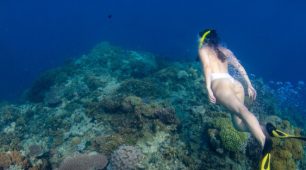
The Great Barrier Reef is the world’s largest coral reef system — 2,300 kilometres long, encompassing 344,400 square kilometres of Marine Park, and visible from space. It contains over 2,900 individual reefs, 900 islands, and astonishing biodiversity across a vast range of reef types. It is the definition of epic. Ningaloo, by comparison, is approximately 300 kilometres long, smaller, but with a remarkable quality that the Great Barrier Reef cannot match: Ningaloo begins right at the shoreline. You can snorkel directly from the beach at Coral Bay and Turquoise Bay without a boat, stepping into living coral gardens from the sand.
Marine Life Highlights
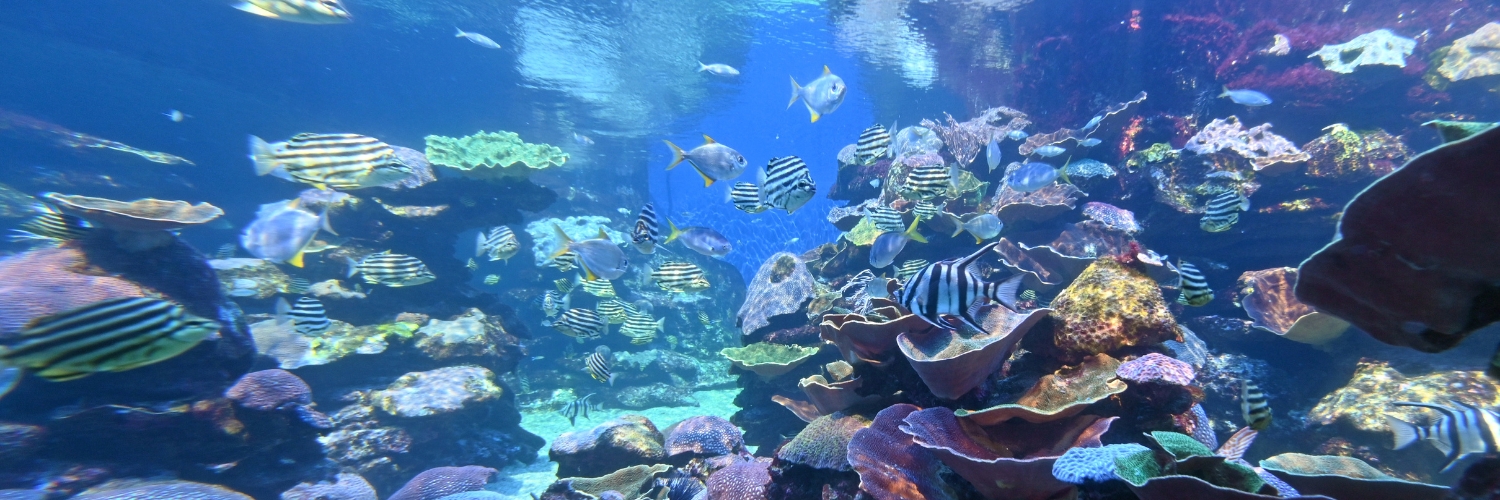
Both reefs are extraordinary for marine life, but each has its signature species. Ningaloo is world-famous for whale shark encounters, the largest fish in the ocean arrives predictably each year between March and July, and Ningaloo is considered the most reliable place on Earth to swim with them. Manta rays are also seen year-round at Ningaloo, and humpback whales migrate through from July to October. The Great Barrier Reef, on the other hand, offers unmatched diversity, over 1,500 species of fish, 4,000 types of mollusc, 134 species of sharks and rays, six of the world’s seven sea turtle species, and reef ecosystems ranging from shallow coral gardens to deep oceanic walls. For sheer variety, the Great Barrier Reef is in a class of its own.
Access and Infrastructure
The Great Barrier Reef is significantly easier to access for most Australian and international visitors. Cairns, Port Douglas, and Airlie Beach are major tourist hubs with frequent direct flights from Sydney, Melbourne, and Brisbane. Reef day tours depart daily and the infrastructure for visitors is excellent. Ningaloo requires either flying into Exmouth (limited direct flights, mostly via Perth) or a long drive through the remote Pilbara and Gascoyne regions. The remoteness is part of the appeal, but it is a consideration for time-limited travellers.
Crowds and Atmosphere
Ningaloo is considerably quieter than the Great Barrier Reef, and this appeals strongly to travellers seeking a more intimate experience. Coral Bay and Exmouth are small towns with a relaxed, off-the-beaten-track atmosphere. The Great Barrier Reef, by contrast, has an established tourism industry, excellent facilities, and the energy of one of the world’s premier travel destinations. For some, that energy is part of the joy; for others, Ningaloo’s quiet remoteness is exactly the point.
Our Honest Verdict
If you have two weeks in Australia and want the most comprehensive, diverse, and easily accessible reef experience, along with world-class islands, dive sites, and marine life in extraordinary variety. The Great Barrier Reef is an outstanding choice. If you want to snorkel from pristine beaches, swim with whale sharks, and experience a reef system in a way that feels truly unspoiled and wild, Ningaloo deserves your serious attention. If you can manage both in a lifetime of Australian travel, do. Australia is rare enough to be home to two of the world’s greatest ocean wonders.
A Hot Getaways destination. Where Care is Our Compass.
FAQs
What is the difference between Ningaloo Reef and the Great Barrier Reef?
Which reef is bigger, Ningaloo or the Great Barrier Reef?
Can you swim with whale sharks at both reefs?
Which reef is easier to visit?
Which reef should I visit?