
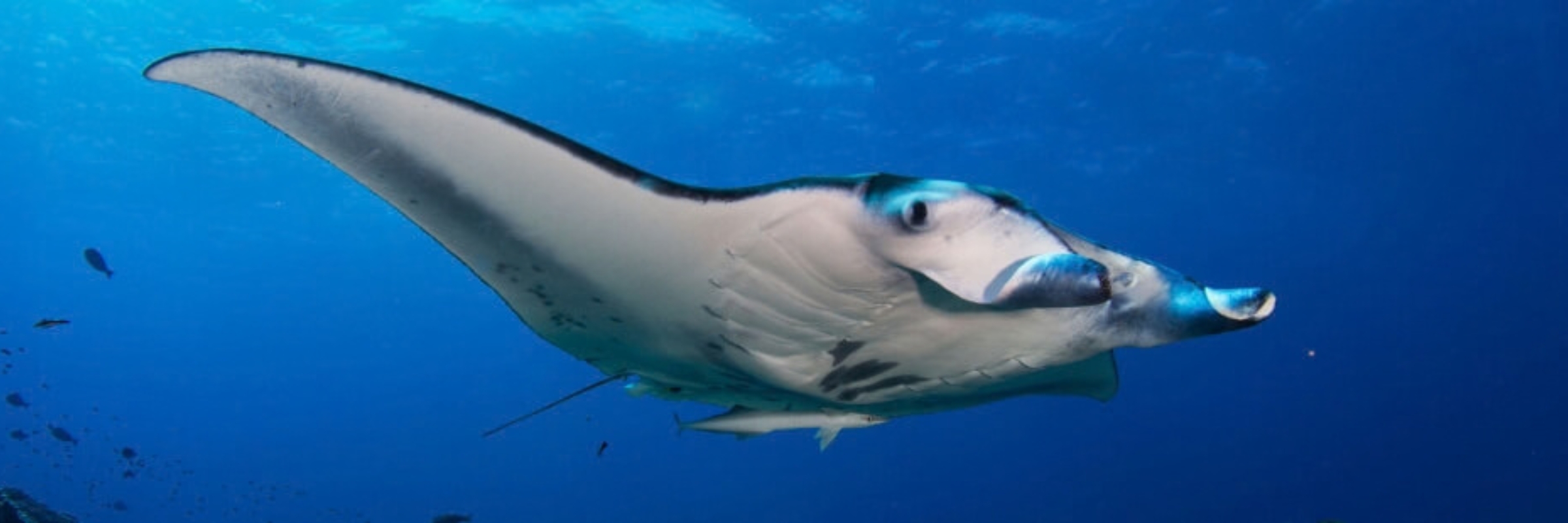
“A manta ray ascending toward you in clear water — that enormous wingspan, those small eyes, that complete unhurriedness — is one of the reef’s most transcendent moments.”
Manta Rays of the Great Barrier Reef – Gentle Giants of the Sea
Manta Ray: Graceful Giants of the Great Barrier Reef
Manta Ray

Quick Facts About Manta Rays
- Scientific name: reef manta, Mobula alfredi (the species most often seen on the Great Barrier Reef); giant or oceanic manta, Mobula birostris, seen less often and mainly offshore
- Also known as: formerly Manta alfredi and Manta birostris
- Found in: reef manta: northern Australia from about Coffs Harbour (NSW) to Shark Bay (WA)
- Diet: zooplankton, filtered through their gill plates
- Size: reef manta usually 3 to 3.5 m across, up to about 5 m; giant manta up to about 7 m
- Lifespan: reef manta estimated up to about 45 years
- Best chance of sighting: Lady Elliot Island in the southern Great Barrier Reef, all year, with larger numbers around May and June; sightings are never guaranteed
Scientific Classification
- Kingdom: Animalia
- Phylum: Chordata
- Class: Chondrichthyes (sharks and rays)
- Order: Myliobatiformes
- Family: Mobulidae
- Genus: Mobula (mantas were moved from the genus Manta in 2018)
- Species: Mobula alfredi (reef manta); also Mobula birostris (giant manta)
- Conservation status: reef manta Vulnerable globally (IUCN, 2019); giant manta Endangered globally (IUCN, 2020). Both protected in Australia as migratory species under the EPBC Act
Learning about reef animals in class? We help schools, universities and study groups plan educational trips to the Great Barrier Reef. Depending on the program, groups can enjoy guided snorkelling and marine biology presentations.
Great Barrier Reef Educational Groups →
Discovering the Enigmatic Manta Ray
Each manta ray is a striking sight with its flattened body and distinctive patterns. Their impressive wingspans, usually 3 to 3.5 metres across in reef mantas, emphasise their status as marine marvels.
Be mesmerised by the captivating presence of these graceful giants as they glide effortlessly through the azure waters. Their expansive wingspans and intricate markings command admiration from all who encounter them.
Anatomy and Characteristics
Manta rays are elasmobranchs (the group of cartilaginous fish that includes sharks and rays) and belong to the family Mobulidae, sharing traits with shark and ray relatives. Despite their imposing appearance, they pose no threat to humans, as they feed primarily on tiny plankton.
Behaviour and Habitat
These magnificent creatures are highly migratory, traversing vast distances across the ocean in search of food and suitable breeding grounds. They can inhabit various habitats within the Great Barrier Reef, from shallow coral lagoons teeming with life to deeper offshore waters. During certain times of the year, large aggregations gather at specific locations along the reef, providing unparalleled opportunities for observation and study.
Ecological Importance
Beyond their aesthetic allure, they play a crucial role in maintaining the health and balance of the Great Barrier Reef ecosystem. As filter feeders, they help regulate plankton populations, thereby preventing algal blooms and promoting overall water clarity. Moreover, their presence is a major draw for tourists, contributing to the local economy and raising awareness about marine conservation efforts.
Conservation Challenges
Despite their ecological significance, manta rays face many threats in the modern world. Worldwide, the biggest threat is fishing, including targeted fishing for their gill plates and accidental capture in nets. They breed very slowly, usually one pup every few years, so populations recover slowly. To address these challenges, conservation initiatives aimed at protecting populations are underway, but concerted efforts are needed to ensure their long-term viability.
Eco-Tourism Opportunities
For adventurous travellers seeking unforgettable experiences, seeing a manta ray is a highlight for many visitors. Numerous ecotourism operators on the Great Barrier Reef offer guided excursions. Visitors may be lucky enough to snorkel or dive with manta rays. Stay calm, keep your distance and never touch them.

Frequently Asked Questions and Answers
Are manta rays dangerous to humans?
Where can I see manta rays on the Great Barrier Reef?
What do manta rays eat?
When is the best time to see manta rays on the reef?
How can I dive or snorkel with manta rays responsibly?
Conclusion
The manta ray symbolises the Great Barrier Reef’s natural splendour, captivating all who encounter its graceful presence. As stewards of this remarkable ecosystem, we protect and preserve these majestic creatures for generations. By fostering sustainable tourism practices and supporting conservation efforts, we can ensure their beauty continues to be inspiring and enchanting for years.
Discover the Best Great Barrier Reef Tours



A Hot Getaways destination. Where Care is Our Compass.