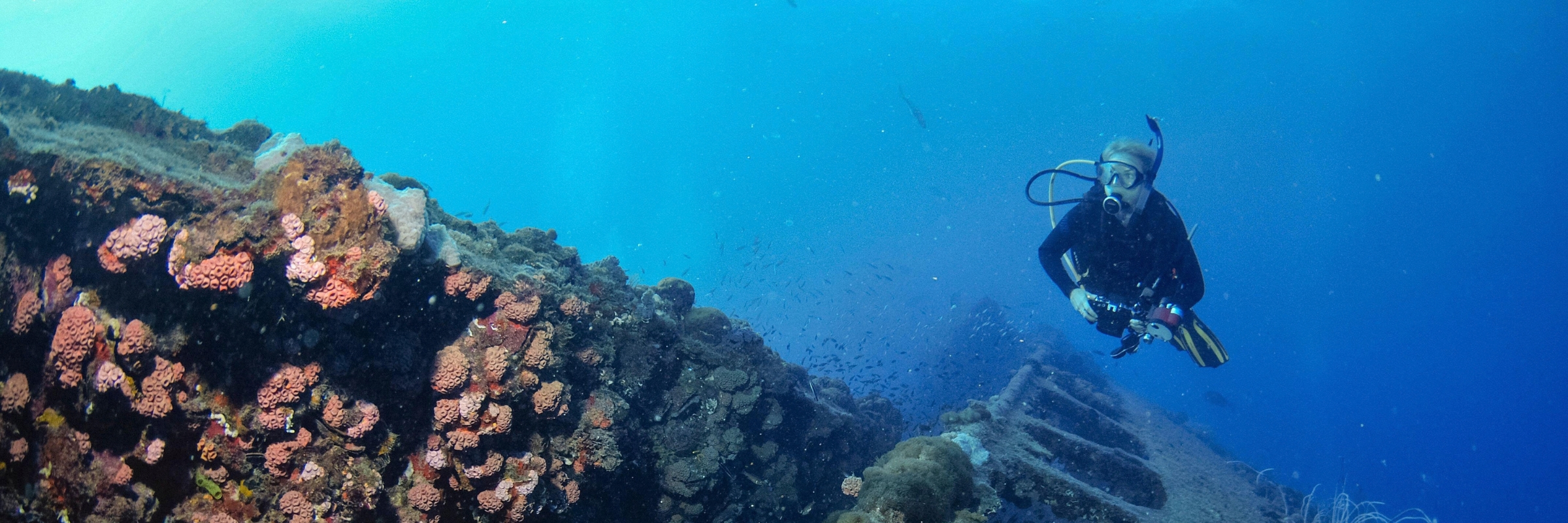
“The SS Yongala went down in a cyclone in 1911 and never surfaced again. A century later, it’s one of the greatest dive sites on the planet.”
SS Yongala Wreck Dive – A Once-in-a-Lifetime Great Barrier Reef Experience
Known around the world as a bucket-list wreck dive, the SS Yongala combines history, mystery, marine life and adventure in one unforgettable dive. Resting in open water near Cape Bowling Green, the wreck attracts experienced divers who come to see turtles, rays, sea snakes, giant gropers, barracuda, coral trout, reef fish and colourful corals.
This is not just a dive site. It is a protected historic shipwreck, a memorial site and a thriving underwater ecosystem.

Quick Facts About the SS Yongala Wreck
-
- The SS Yongala sank during a cyclone in 1911.
- The wreck was positively identified in 1958.
- It is approximately 109 metres long.
- The wreck lies in the central Great Barrier Reef Marine Park.
- Maximum depth is approximately 30 metres, with an average dive depth of around 20 metres.
- The site is suitable for advanced and experienced divers only.
- Penetration diving is prohibited because the wreck is protected.
A Legendary Great Barrier Reef Wreck Dive
The SS Yongala is often described as one of the best wreck dives in the world. Its appeal comes from the rare combination of an intact historic shipwreck, dramatic open-water conditions and an exceptional concentration of marine life.
Unlike many reef dive sites, the Yongala sits on a sandy seabed away from surrounding reef structures. This means the wreck itself has become a magnet for life. Over more than 100 years, corals, sponges, sea fans and reef fish have colonised the vessel, transforming it into a living reef.
For divers, this creates a powerful experience. The shape of the ship is still visible, yet it is now part of the ocean. Large marine animals patrol the wreck, smaller reef fish shelter among the coral, and every dive can feel different depending on visibility, current and wildlife encounters.
The History of the SS Yongala
The SS Yongala was a passenger and freight steamer travelling along the Queensland coast when it disappeared during a cyclone in March 1911. The tragedy became one of Australia’s most significant maritime disasters. Yongala Dive records that the ship sank on 23 March 1911 and remained undiscovered for almost 50 years before being positively identified in 1958.
Today, the wreck remains an important heritage site. It is a place of history, remembrance and respect. Divers visiting the site should remember that the Yongala is also the final resting place for those lost in the disaster. Queensland Government guidance asks divers to be respectful when visiting the wreck.
Where Is the SS Yongala Wreck?
The SS Yongala Wreck is located off the coast of North Queensland, in the central section of the Great Barrier Reef Marine Park.
It lies approximately:
-
- 12 nautical miles east of Cape Bowling Green
- 46 nautical miles east-south-east of Townsville
- Near the Ayr and Alva Beach region
This makes Townsville, Magnetic Island and Ayr important gateways for divers wanting to experience the Yongala.
What Makes the SS Yongala So Special?
1. It is a living reef
The wreck is covered with marine growth, including soft corals, hard corals, sea fans, sponges and oysters. Queensland Government notes that this marine life also helps protect the historic fabric of the ship.
2. It attracts large marine life
The Yongala is famous for big marine encounters. Divers may see giant gropers, marble rays, eagle rays, turtles, sea snakes, barracuda, bull sharks and large schools of fish.
3. It has powerful history
The Yongala is not just a dive site. It is a historic shipwreck with a tragic story, making the dive emotionally and historically significant.
4. It is a true advanced dive
The site is exposed to weather and can experience strong currents. Queensland Government recommends diving the wreck at the turn of the tide and in good sea conditions.
Marine Life on the SS Yongala
The SS Yongala is one of the best places on the Great Barrier Reef to see abundant marine life in one concentrated location.
Divers may encounter:
-
- Giant gropers
- Marble ray
- Eagle rays
- Sea turtles
- Sea snakes
- Barracuda
- Trevally
- Coral trout
- Cod
- Wrasse
- Damselfish
- Sea perch
- Reef sharks
- Soft corals
- Sea fans
- Sponge
- Hard corals
Because the wreck rises from a sandy seabed, it acts like an oasis for marine life. This is one of the reasons divers travel from around Australia and overseas to experience it.
Diving Conditions at the SS Yongala
The SS Yongala is a dive for confident, certified divers.
According to Queensland Government dive site information:
-
- Maximum depth: approximately 30 metres
- Average depth: approximately 20 metres
- Average visibility: 12 to 30 metres
- Conditions: exposed to weather and currents
- Recommended diver level: advanced and experienced divers only
This is not usually a beginner dive or introductory scuba dive site. Divers should be comfortable with depth, current, boat procedures and controlled descents and ascents.
Protected Historic Shipwreck
The SS Yongala sits within a protected zone with a radius of 797 metres. A permit is required to dive the site, and penetration diving is prohibited. Anchoring restrictions and moorings help protect the wreck from damage.
Divers should follow all operator instructions and avoid touching the wreck, corals or marine life.
Responsible diving helps protect:
-
- the historic shipwreck
- the marine ecosystem
- coral growth
- artefact
- the memory of those lost
How to Dive the SS Yongala
Most divers visit the SS Yongala on guided dive trips with licensed operators.
Trips may depart from:
-
- Townsville
- Magnetic Island
- Ayr / Alva Beach
Some operators offer day trips with two certified dives, historical briefings and environmental education. Adrenalin Snorkel & Dive lists boarding options from Townsville’s Breakwater Marina and Magnetic Island’s Nelly Bay Ferry Terminal.
Yongala Dive, based near Alva Beach, describes its trips as one of the fastest ways to access the wreck, with small dive groups and purpose-built boats.
Who Is the SS Yongala Best For?
The SS Yongala is best suited to:
-
- Certified scuba divers
- Advanced divers
- Experienced open-water divers
- Wreck diving enthusiasts
- Marine life photographers
- Divers visiting Townsville or Magnetic Island
- Great Barrier Reef dive travellers
- Bucket-list adventure travellers
It is not generally recommended for first-time divers due to depth, current and open-water conditions.
Best Time to Dive the SS Yongala
The SS Yongala can be dived at different times of the year, depending on weather and operator schedules. Conditions are especially important because the wreck is exposed to wind, current and sea state.
For the best experience, divers should:
-
- choose calm weather windows
- book with experienced operators
- check current conditions before departure
- allow flexibility in travel plans
- dive within their certification and comfort level
Visibility can vary, but Queensland Government notes average visibility between 12 and 30 metres.
Why Add the SS Yongala to Your Great Barrier Reef Trip?
The SS Yongala offers something completely different from a standard coral reef dive. It combines a powerful maritime story with some of the most impressive marine life encounters in Queensland.
For many divers, it is one of the most memorable dives of their life.
It is ideal to combine with:
-
- Townsville holidays
- Magnetic Island stays
- Great Barrier Reef dive trip
- North Queensland road trips
- Advanced dive itineraries
- Wreck diving holidays
7 Reasons to Dive the SS Yongala
-
- Experience one of the world’s most famous wreck dives
- See a historic shipwreck transformed into a living reef
- Encounter large marine life in open water
- Dive within the Great Barrier Reef Marine Park
- Add a world-class dive to your Townsville holiday
- Learn about one of Australia’s significant maritime stories
- Enjoy a challenging and rewarding dive for experienced divers
Responsible Diving at the Yongala
The SS Yongala deserves respect. It is a protected historic shipwreck, a fragile underwater habitat and a memorial site.
When diving the Yongala:
-
- do not touch the wreck
- do not remove anything
- do not enter the wreck
- maintain excellent buoyancy
- follow your guide’s instructions
- respect marine life
- dive within your training and experience
Every careful diver helps protect this extraordinary site for the future.
Frequently Asked Questions About the SS Yongala Wreck
Where is the SS Yongala Wreck?
Is the SS Yongala one of the best wreck dives in the world?
How deep is the SS Yongala Wreck?
Can beginner divers dive the SS Yongala?
Can you enter the SS Yongala Wreck?
What marine life can you see at the SS Yongala?
Is the SS Yongala accessible from Townsville?
Plan Your SS Yongala Wreck Dive
The SS Yongala Wreck is one of the most remarkable dive sites on the Great Barrier Reef. With its powerful history, protected status, abundant marine life and world-class reputation, it is a must-do experience for certified divers visiting Townsville, Magnetic Island or the central Great Barrier Reef.
For experienced divers, this is more than a wreck dive. It is a journey into Queensland’s maritime history and one of the most wildlife-rich underwater sites in Australia.
Explore SS Yongala Wreck dive trips and Great Barrier Reef diving experiences with GreatBarrierReefTours.com.
Explore Great Barrier Reef Tours
A Hot Getaways destination. Where Care is Our Compass.