
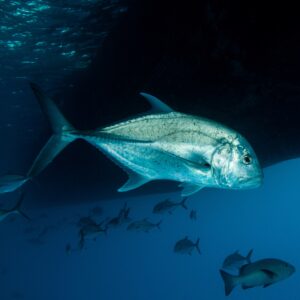
“The giant trevally is a hunter’s fish — silver, powerful, and built to dominate the reef edge where the open water begins.”
Giant Trevally – The Great Barrier Reef’s Most Formidable Predatory Fish
The Giant Trevally (Caranx ignobilis) is one of the largest and most powerful predatory fish on the Great Barrier Reef. Growing to over a metre in length and exceeding 80 kilograms, it’s a dominant apex predator of reef edge environments and is known to hunt seabirds as well as fish — a level of predatory ambition that makes it unique among reef fish.
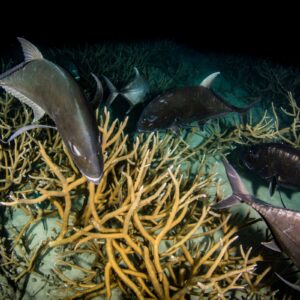
About the Giant Trevally
Quick Facts About the Giant Trevally Great Barrier Reef
• Scientific name: Caranx ignobilis
• Also known as: GT, Ulua
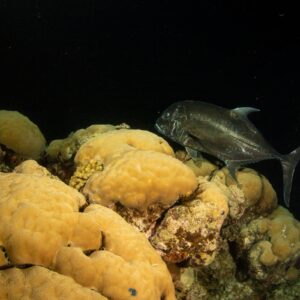
• Found in: Outer reefs, lagoons and reef drop-offs
• Diet: Fish, squid and crustaceans
• Average size: 60–120 cm (can exceed 170 cm)
• Conservation status: Least Concern (IUCN)
• Best chance of sighting: Outer reef dive sites and drop-offs
This page is part of our Great Barrier Reef Animals Hub, where you can discover the incredible marine life of the reef.
Great Barrier Reef Animals Hub
What Is a Giant Trevally?
The Giant Trevally Great Barrier Reef species is one of the reef’s most powerful and fast-moving predators. Known for their strength, speed and aggressive hunting behaviour, giant trevally are a thrilling sight for snorkellers and divers.
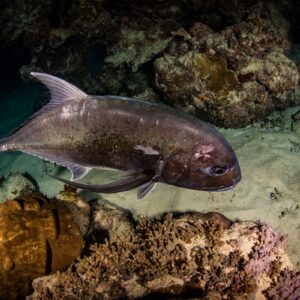
These large, muscular fish have a sleek silver body and a blunt head, built for speed and sudden bursts of power. You’ll often see them cruising patrol routes along reef edges or darting through schools of baitfish.
Giant trevally play a key role in maintaining balance within the reef ecosystem by controlling populations of smaller fish and keeping marine life dynamics in check.
Scientific Classification
Scientific Classification
• Kingdom: Animalia
• Phylum: Chordata
• Class: Actinopterygii
• Order: Carangiformes
• Family: Carangidae
• Genus: Caranx
• Species: Caranx ignobilis
• Conservation Status: Least Concern (IUCN)
Where Do Giant Trevally Live on the Great Barrier Reef?
Giant trevally are commonly found in:
• Outer reef drop-offs
• Coral reef edges
• Lagoons
• Channels between reef structures
They prefer areas with strong currents where baitfish gather. On the Great Barrier Reef, you will often encounter them near Cairns and Port Douglas outer reef systems, particularly around deeper reef edges.
Juveniles may inhabit shallower lagoon areas, while adults dominate more exposed reef zones.
What Do Giant Trevally Eat?
Giant trevally are carnivorous predators.
They feed on:
• Smaller fish
• Squid
• Crustaceans
They are known for explosive hunting techniques, including ambushing prey and chasing baitfish at high speed. In some parts of the world, they have even been observed leaping from the water to catch birds.
Can You See a Giant Trevally on a Reef Tour?
Yes, the Giant Trevally Great Barrier Reef species is commonly seen on snorkel and dive tours, particularly on outer reef sites.
You may spot them:
• Hunting near reef edges
• Cruising in open water
• Moving through schools of fish
They are especially exciting to observe during feeding activity, where their speed and power become obvious.
Planning a reef trip?
7 Interesting Facts About the Giant Trevally Great Barrier Reef
- Giant trevally are one of the reef’s top fish predators.
- They can grow over 170 cm in length.
- They are capable of incredible bursts of speed.
- Giant trevally often hunt in coordinated groups.
- They can change colour slightly depending on mood or environment
- Some populations have been observed hunting seabirds.
- The Giant Trevally Great Barrier Reef species is highly sought after by sport fishers.
Giant Trevally Conservation on the Great Barrier Reef
Giant trevally are currently listed as Least Concern, but they still face pressures from:
• Overfishing in some regions
• Habitat degradation
• Changes in reef ecosystems
On the Great Barrier Reef, marine park protections help regulate fishing and preserve habitats.
Responsible tourism and sustainable fishing practices are important for maintaining healthy populations.
Animals Commonly Seen With Giant Trevally
While exploring the reef, snorkellers and divers often see giant trevally alongside:
• Reef Sharks
• Barracuda
• Batfish
• Surgeonfish
These species share similar reef environments and often appear together around reef drop-offs and feeding zones.
Frequently Asked Questions – Giant Trevally Great Barrier Reef
Are giant trevally common on the Great Barrier Reef?
Are giant trevally dangerous?
How big do giant trevally grow?
What do giant trevally eat on the Great Barrier Reef?
Can you see giant trevally while snorkelling?
Discover the Giant Trevally Great Barrier Reef Experience
The Giant Trevally Great Barrier Reef experience offers a glimpse into the raw power of the reef ecosystem. Watching these fast, muscular fish hunt and move through the water adds excitement to any snorkel or dive trip.
As you explore the reef, keep an eye on the deeper edges and open water, you may witness one of the reef’s most impressive predators in action.
Explore:
→ Compare Reef Tours
→ Reef Animals Hub
Discover the Great Barrier Reef

A Hot Getaways destination. Where Care is Our Compass.