
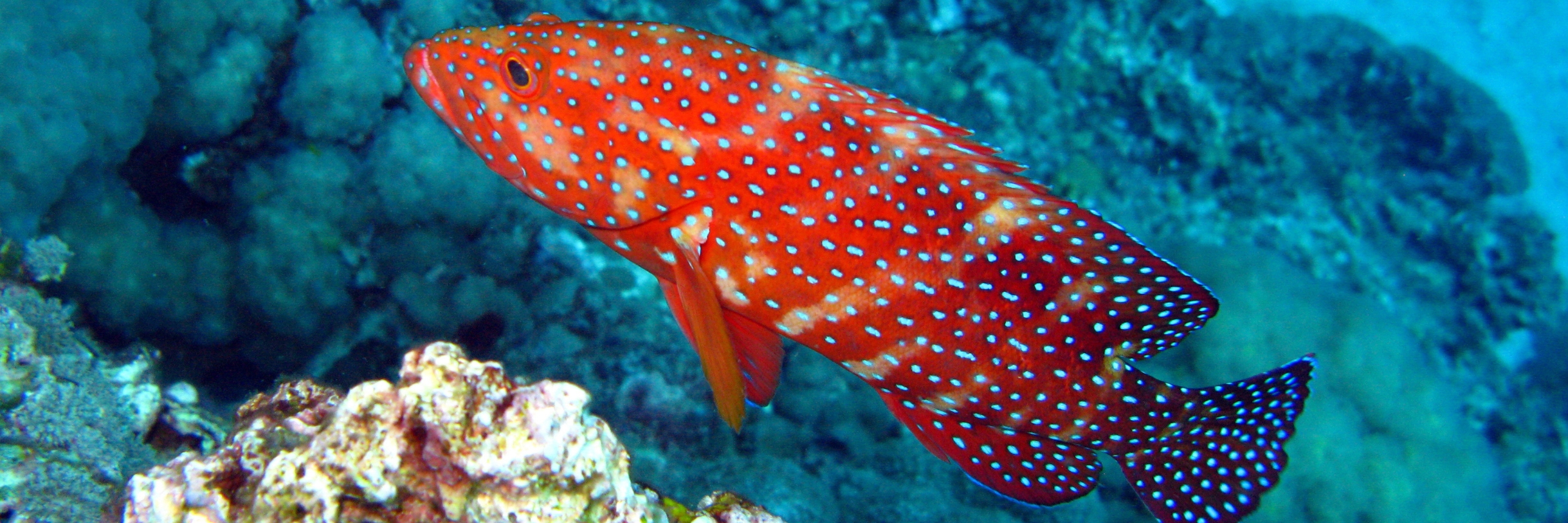
“The coral trout is the reef’s premier predator — spectacular in colour, lightning-fast in the strike, and one of Australia’s most prized table fish.”
Coral Trout of the Great Barrier Reef – Colour, Speed and Predator Power
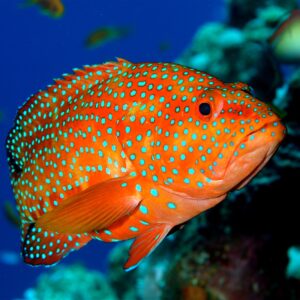
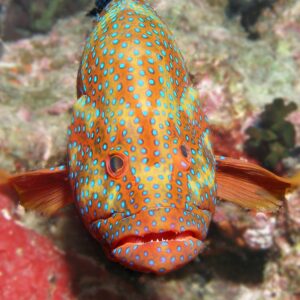
The Coral Trout (Plectropomus leopardus) is one of the most striking and recognisable fish on the Great Barrier Reef. Red, orange or olive-brown with fine blue spots scattered across its body, it’s a mid-sized grouper and one of the reef’s key predators — controlling populations of smaller reef fish and maintaining ecological balance.

About the Coral Trout
Coral Trout are usually solitary ambush predators, favouring coral-rich reef environments where they can position themselves near structure and strike at passing prey. They’re known for their speed and accuracy when they strike.
Like the Barramundi Cod, Coral Trout are protogynous hermaphrodites — most start life as female, and the largest, most dominant individuals change to male over time. This means that overfishing of large Coral Trout disproportionately removes breeding males from the population, which has important implications for reef fish management.
Quick Facts About Coral Trout
- Scientific name: Plectropomus leopardus
- Also known as: Common Coral Trout, Leopard Coral Grouper, Blue-spot Trout, Leopard Cod
- Found in: coral-rich lagoon and mid-shelf reefs, from about 3 m to 100 m deep
- Diet: adults eat mainly fish; young fish also eat crustaceans and squid
- Size: commonly around 35 cm; can reach 120 cm
- Lifespan: up to about 14 years on the Great Barrier Reef
- Best chance of sighting: resting on or near coral outcrops, or cruising slowly near schools of small fish
Scientific Classification
- Kingdom: Animalia
- Phylum: Chordata
- Class: Actinopterygii (ray-finned fishes)
- Order: Perciformes
- Family: Epinephelidae (groupers; formerly part of Serranidae)
- Genus: Plectropomus
- Species: Plectropomus leopardus
- Conservation status: Least Concern (IUCN, 2018)
Common Names
- Primary common name: Common Coral Trout
- Secondary common name: Leopard Coral Grouper
- Other names: Coral Trout, Blue-spot Trout, Leopard Cod
Related Species
- Bluespotted Coral Trout (Plectropomus laevis)
- Barcheek Coral Trout (Plectropomus maculatus)
- Passionfruit Coral Trout (Plectropomus areolatus), northern Great Barrier Reef
Identification Notes
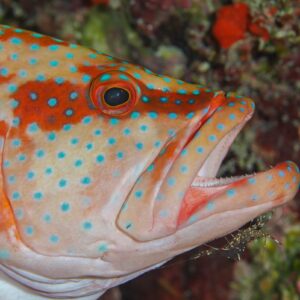
Colour ranges from olive-brown to bright orange-red. Small, evenly spaced blue spots cover the head, body and fins, and there is a blue ring around the eye. Its spots are finer than those of other coral trout; the Barcheek Coral Trout has dash-shaped spots on the cheek, and the Bluespotted Coral Trout has dark saddles along its back.
Role on the Reef
Coral trout are key reef predators that help shape which fish live on a reef. The Reef Authority reports they are more plentiful, larger and older on reefs protected as Green Zones, which also supply young fish to nearby reefs. Most start life as females and can later change to males.
Learning about reef fish in class? We help schools, universities and study groups plan educational trips to the Great Barrier Reef. Depending on the program, groups can enjoy guided snorkelling and marine biology presentations.
Great Barrier Reef Educational Groups →
Coral Trout and the Great Barrier Reef
Coral trout are a primary target of the Queensland reef line fishery, supporting significant commercial and recreational fishing industries. In the Marine Park, commercial and recreational fishing of Coral Trout is carefully managed with size and bag limits and no-take zones within the fully protected Green Zones.

Where to See Coral Trout
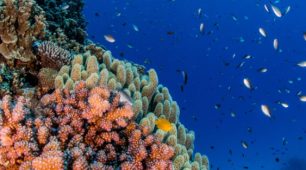
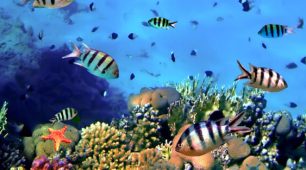
Coral Trout are found throughout the Great Barrier Reef on healthy coral reef systems. They’re regularly encountered on dives and snorkels, typically hovering near coral heads or at the base of bommies.
A Hot Getaways destination. Where Care is Our Compass.
FAQs
How do you identify a coral trout?
What role does the coral trout play on the reef?
Where can I see coral trout on the Great Barrier Reef?
Can coral trout change colour?
Is the coral trout fished commercially?
