

“The Moorish Idol moves through the reef with the slow deliberateness of a fish that knows it’s extraordinary — and it is.”
Moorish Idol – One of the Great Barrier Reef’s Most Striking Reef Fish
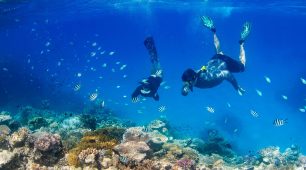
Moorish Idol on the Great Barrier Reef
Moorish Idol
- Striking Colours. Moorish Idols feature a bold mix of black, white, and yellow, creating a visually stunning display that catches the eye of every snorkeller and diver.
- Graceful Movement. Their slow, elegant swimming style adds a touch of serenity to the underwater world, making each encounter feel like a dance among the corals.
- Reef Residents. These beauties are nestled within the vibrant coral reefs of the Great Barrier Reef, blending seamlessly with their colourful surroundings.
- Ecological Role. Moorish Idols contribute to the balance of the reef ecosystem. Their unique feeding habits support the delicate interrelationships between marine species.
- Curious Nature: Known for their inquisitive behaviour, these fish often approach divers with a calm, friendly curiosity, offering memorable views.
- Photographer’s Favourite. With their distinctive patterns and graceful form, Moorish Idols are a must-capture subject for underwater photography enthusiasts.
- Reef Health Indicator. The presence of Moorish Idols is a sign of a thriving reef, highlighting the Great Barrier Reef’s natural beauty and ecological balance.
Discover the Moorish Idol
Prepare to immerse yourself in the captivating beauty of the Moorish Idol. This stunning reef fish graces the waters of the Great Barrier Reef with its elegant presence. Its vibrant colours and graceful movements attract divers and snorkellers, making it a beloved icon of the underwater world.
Appearance and Characteristics
It is easily recognisable by its elongated, flattened body adorned with vibrant black, yellow, and white stripes. Its distinctive dorsal fin resembles a graceful feather, while its tall, flattened, disc-shaped body allows it to effortlessly navigate the coral gardens of the reef. You can often spot these elegant fish gliding among the coral formations, with their bright colours standing out against the back drop of the underwater landscape.

Habitat and Distribution
Feeding and Behaviour
Moorish idols feed mainly on encrusting sponges, plus coral polyps, sea squirts and other small invertebrates. Their long, tube-shaped snouts are perfectly suited for picking food from cracks and crevices in the reef.
Despite their delicate appearance, these fish are agile swimmers, capable of darting quickly to evade predators or capture prey. You’ll often see Moorish idols, usually in pairs or small groups, foraging among coral heads and rocky crevices.
Ecological Importance
Moorish idols are one of the many reef fish that feed on sponges and other small animals growing on the reef, playing their part in the Great Barrier Reef’s complex food web. Moreover, their presence boosts biodiversity and visual appeal, enriching visitors’ experience.

Quick Facts About the Moorish Idol
- Scientific name: Zanclus cornutus
- Found in: coastal and offshore coral and rocky reefs and lagoons, from about 1 m to 180 m deep
- Diet: mainly encrusting sponges, plus coral polyps, sea squirts and other small invertebrates
- Size: up to 23 cm
- Lifespan: not well documented
- Best chance of sighting: coral reefs and lagoons, usually in pairs or small groups
Scientific Classification
- Kingdom: Animalia
- Phylum: Chordata
- Class: Actinopterygii (ray-finned fishes)
- Order: Acanthuriformes (formerly Perciformes)
- Family: Zanclidae (the Moorish Idol is the only species in this family)
- Genus: Zanclus
- Species: Zanclus cornutus
- Conservation status: Least Concern (IUCN)
Common Names
- Primary common name: Moorish Idol
- About the scientific name: Zanclus comes from the Greek for “sickle”, after the curved back fin, and cornutus is Latin for “horned”, after the small bumps above the eyes of adults
Related Species
- Its closest relatives are the surgeonfishes, such as the Convict Surgeonfish (Acanthurus triostegus) and Lined Bristletooth (Ctenochaetus striatus)
- Look-alike: the Schooling Bannerfish (Heniochus diphreutes), a butterflyfish, not a close relative
Identification Notes
The Moorish Idol has a tall, disc-shaped body with two broad black bars, a yellow saddle across the snout, a long tube-shaped snout and a long, white, sickle-shaped back fin. Bannerfish look similar but have no yellow saddle on the snout and a much shorter snout.
Role on the Reef
Moorish idols pick encrusting sponges and other small animals from cracks and crevices in the reef. They are notoriously hard to keep in aquariums, one more reason they are best enjoyed in the wild.
Learning about reef fish in class? We help schools, universities and study groups plan educational trips to the Great Barrier Reef. Depending on the program, groups can enjoy guided snorkelling and marine biology presentations.
Great Barrier Reef Educational Groups →
Encountering Moorish Idols
Embark on snorkelling and diving expeditions to the Great Barrier Reef for unmatched chances to see Moorish idols in their natural habitat. Expert reef guides can take you to prime viewing spots amidst vibrant coral gardens, offering close encounters with these enchanting creatures.
Frequently Asked Questions and Answers
What is a Moorish Idol?
Where can I spot Moorish Idols on the Great Barrier Reef?
What do Moorish Idols eat?
Are Moorish Idols safe to interact with?
How can I capture great photos of Moorish Idols?
Conclusion
The Moorish Idol is a true gem of the Great Barrier Reef, captivating all who encounter it with its beauty and grace. Whether you’re a seasoned diver or a first time snorkeller, witnessing these elegant fish in their underwater paradise is an experience not to be missed.
Discover the Great Barrier Reef Tours





A Hot Getaways destination. Where Care is Our Compass.
