
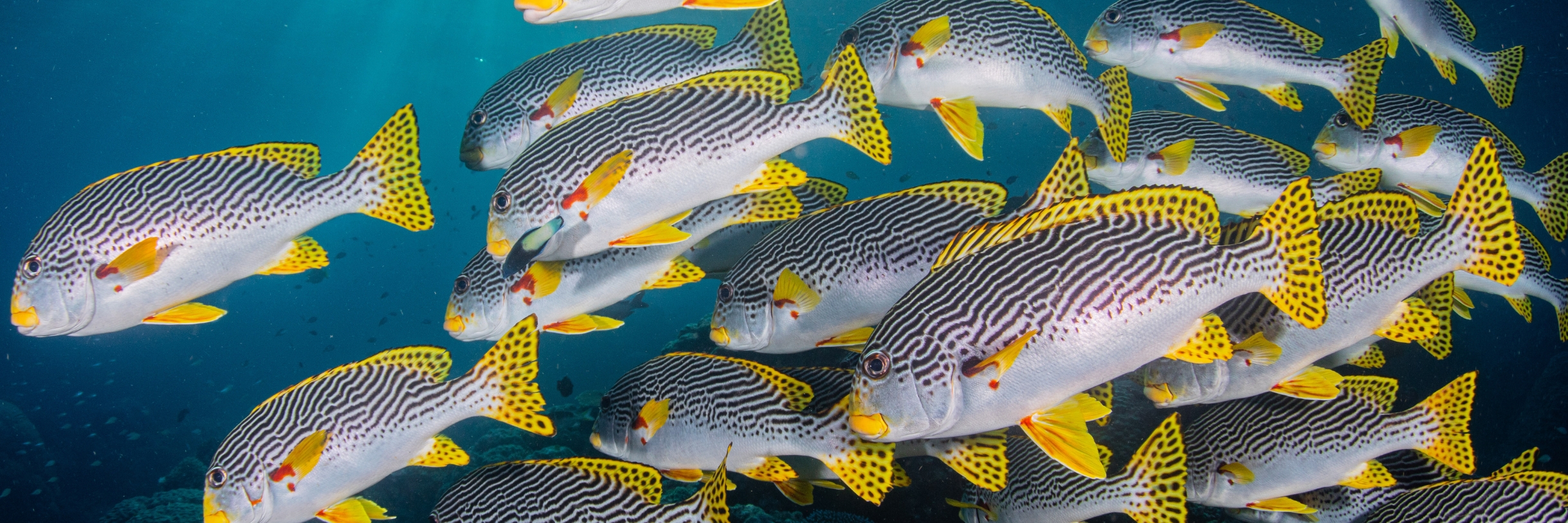
“The sweetlips hangs in clusters under coral overhangs, bold-striped and unruffled — one of the reef’s most elegant schooling fish.”
Sweetlips of the Great Barrier Reef – Elegant Schooling Fish of the Coral Overhangs
-
- Sweetlips are colourful reef fish commonly seen on the Great Barrier Reef
- Known for their spotted patterns and distinctive thick lips
- Juveniles and adults look completely different
- Often found resting under coral ledges during the day
- Belong to the grunt family (Haemulidae)
- Frequently spotted while snorkelling and scuba diving
- A favourite subject for underwater photographers
Introduction
Sweetlips on the Great Barrier Reef are one of the reef’s most charming and photogenic fish. With their striking spots, bold stripes, and famously “pouting” lips, they are easy to recognise and a delight to encounter while snorkelling or scuba diving.
Found across coral reefs from Cairns and Port Douglas to the Whitsundays, sweetlips are calm, curious fish that often gather in small groups beneath coral overhangs. If you’re exploring the reef with a marine biologist or dive guide, sweetlips are often pointed out as a classic example of reef fish that dramatically change appearance as they grow.
Scientific Classification
-
- Kingdom: Animalia
- Phylum: Chordata
- Class: Actinopterygii
- Order: Perciformes
- Family: Haemulidae
- Genus: Plectorhinchus
- Species: Plectorhinchus spp. (multiple species
- Conservation Status: Least Concern (varies by species, IUCN)
Sweetlips are a group of species, not just one fish. On the Great Barrier Reef, common species include:
-
- Plectorhinchus chaetodonoides (Harlequin Sweetlips)
- Plectorhinchus lineatus (Lined Sweetlips)
- Plectorhinchus gaterinus (Blackspotted Sweetlips)
What Are Sweetlips?
Sweetlips are reef fish belonging to the grunt family, scientifically known as Haemulidae. Their name comes from their thick, fleshy lips — a feature that helps them detect prey along the reef floor.
There are several species found on the Great Barrier Reef, including:
-
- Harlequin Sweetlips
- Oriental Sweetlips
- Blackspotted Sweetlips
- Lined Sweetlips
Each species has unique patterns, but all share that unmistakable rounded body shape and prominent lips.
Why Do Sweetlips Look So Different as Juveniles?
One of the most fascinating things about Sweetlips Great Barrier Reef species is how dramatically they change as they mature.
Juvenile sweetlips:
-
- Have bold, wavy patterns
- Often display high-contrast black, white, and yellow colours
- Move in exaggerated, wiggling motions that resemble toxic flatworms
This movement helps protect them from predators.
Adult sweetlips:
-
- Develop spotted or striped patterns
- Lose the exaggerated swimming style
- Often rest calmly in groups during daylight hours
This transformation is one of the reef’s most remarkable visual changes.
Where to See Sweetlips on the Great Barrier Reef
You can see Sweetlips Great Barrier Reef species at:
-
- Outer Barrier Reef dive sites near Cairns
- Coral gardens around Port Douglas reefs
- Reef pontoons and snorkelling platforms
- Whitsundays reef systems
- Shallow bommies and coral overhangs
They are often found in shaded areas during the day and become more active at night.
If you’re visiting popular sites like Norman Reef, Hastings Reef, or Agincourt Reef, there’s a very good chance you’ll encounter sweetlips while exploring coral formations.
What Do Sweetlips Eat?
Sweetlips are carnivorous reef fish.
They feed on:
-
- Small crustaceans
- Worms
- Molluscs
- Tiny reef invertebrates
Their sensitive lips help them detect prey hidden in sand and coral crevices.
Sweetlips and Reef Behaviour
Sweetlips are generally calm and non-aggressive. Divers often observe them:
-
- Hovering quietly under coral ledges
- Resting in loose schools
- Slowly cruising along reef slopes
- Gathering in sheltered lagoons
Because they tolerate careful divers, they are excellent for underwater photography — but always maintain respectful distance as part of reef etiquette.
Quick Facts – Sweetlips Great Barrier Reef
Here are 7 key facts about Sweetlips Great Barrier Reef species:
- Sweetlips belong to the grunt family (Haemulidae).
- They are named for their thick, flesy lips.
- Juveniles and adults look completely different.
- They are commonly found in shaded reef areas.
- Some species grow up to 80 cm in length.
- They are carnivores feeding on small invertebrates.
- They are a favourite subject for underwater photographers.
FAQs About Sweetlips Great Barrier Reef
Are sweetlips dangerous?
Why are they called sweetlips?
Do sweetlips change colour?
Where is the best place to see sweetlips on the Great Barrier Reef?
Can you see sweetlips while snorkelling?
Conclusion
The Sweetlips Great Barrier Reef species are a beautiful reminder of how diverse and ever-changing the reef truly is. From the wiggling, patterned juveniles to the calm, spotted adults resting beneath coral ledges, these fish are a highlight for anyone exploring Australia’s most famous natural wonder.
Whether you’re snorkelling for the first time or diving deep along outer reef walls, keep an eye out for sweetlips, one of the reef’s most photogenic and fascinating residents.
Discover Great Barrier Reef Tours


A Hot Getaways destination. Where Care is Our Compass.