
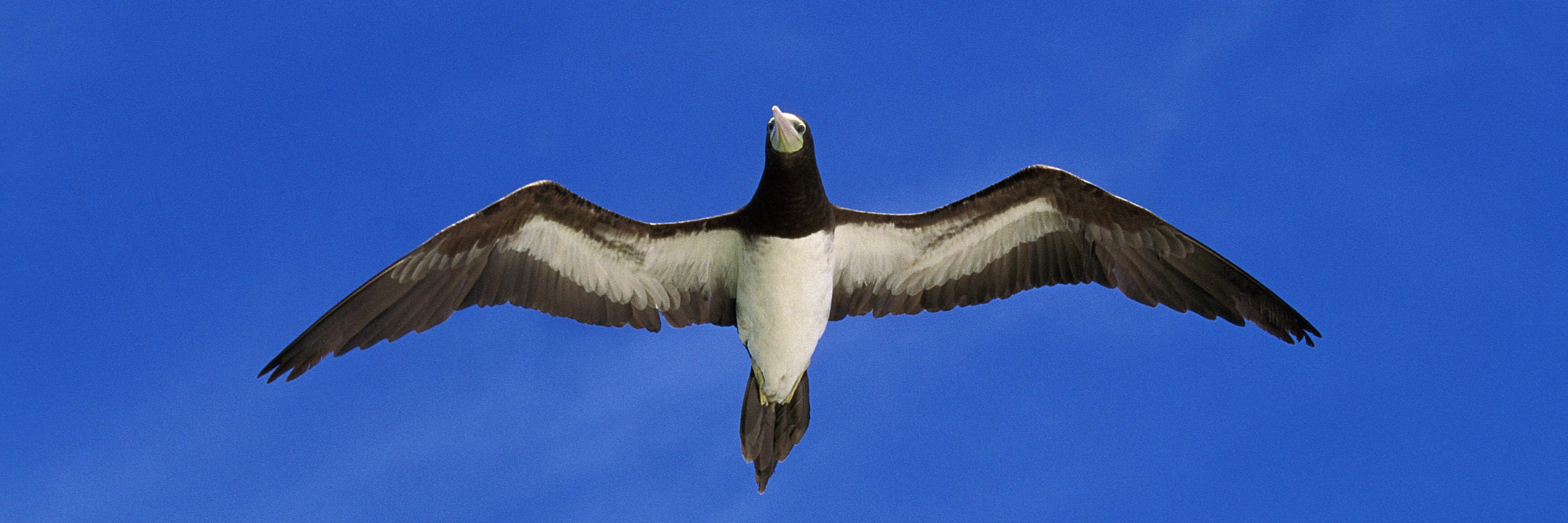
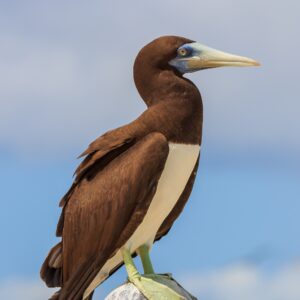
“The brown booby perches on a coral cay post with complete indifference to the visitors below, lord of the island, watching the horizon for fish.”
Brown Booby of the Great Barrier Reef – Master Diver of the Coral Cays
The Brown Booby (Sula leucogaster) is a familiar seabird of the Great Barrier Reef, nesting on the coral cay islands that dot the reef system and fishing the surrounding waters with extraordinary aerial precision. For visitors who spend time on reef islands, the Brown Booby is a regular and entertaining companion.
Quick Facts About the Brown Booby
- Common Name: Brown Booby
- Scientific Name: Sula leucogaster
- Size: About 65–75 cm long, with a wingspan of 130–150 cm
- Diet: Fish (including flying fish, mullet and anchovy) and squid, caught by plunge-diving
- Habitat: Tropical and subtropical seas worldwide
- Found On The Reef: Offshore cays and reef navigation markers; nests at Michaelmas Cay, Raine Island and East Fairfax Island
- Conservation Status: Least Concern (IUCN Red List)
Scientific Classification
- Kingdom: Animalia
- Phylum: Chordata
- Class: Aves (birds)
- Order: Suliformes (older Australian lists use Pelecaniformes)
- Family: Sulidae
- Genus: Sula
- Species: Sula leucogaster
About the Brown Booby
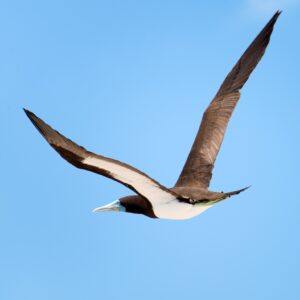
The Brown Booby is a large seabird, about 65–75 cm long with a wingspan of 130–150 cm, with chocolate-brown upperparts, a clean white belly, and a yellow bill and feet. It is found across tropical oceans worldwide, nesting on coral cays and remote islands.
They are accomplished plunge-divers — spotting fish from heights of up to 20 metres before folding their wings and hitting the water at speed to catch prey. The name “booby” is believed to derive from the Spanish bobo (fool), referring to the bird’s apparent lack of fear of humans — though this quality tends to make visitors rather fond of them.
Nesting and Behaviour
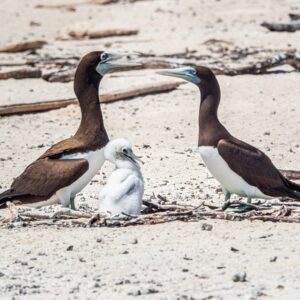
Brown Boobies nest in colonies on coral cay islands, building simple nests on the ground or in low vegetation. Breeding times vary between colonies. At Raine Island, courtship and laying start around July, while on the Fairfax Islands in the southern Reef nesting peaks from about September to February, with chicks remaining in the colony for several months after hatching.
They are highly social during the breeding season and can often be observed in large groups on cay beaches, perched on navigation markers, or circling reef edges in search of schooling fish.


Where to See Brown Boobies
Brown Boobies are seen around many coral cays of the Great Barrier Reef. Large colonies nest on Raine Island (closed to visitors) and East Fairfax Island in the Bunker Group, and they also nest on Michaelmas Cay off Cairns, one of the easiest places for visitors to see them. They’re also regularly seen perched on reef navigation markers throughout the reef system.
A Hot Getaways destination. Where Care is Our Compass.
Learning about reef animals in class? We help schools, universities and study groups plan educational trips to the Great Barrier Reef. Depending on the program, groups can enjoy guided snorkelling and marine biology presentations.
Great Barrier Reef Educational Groups →
FAQs
How do you identify a brown booby?
Where can I see brown boobies on the Great Barrier Reef?
How do brown boobies catch fish?
Are brown boobies common on the reef?
How should I behave around nesting seabirds on reef islands?