
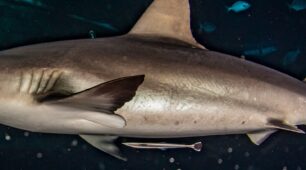
“The grey reef shark circles the outer reef with a calm authority that reminds you you’re visiting its home.”
Grey Reef Shark – The Great Barrier Reef’s Most Common Reef Shark
This page belongs to the Great Barrier Reef Shark category
Quick Facts About the Grey Reef Shark Great Barrier Reef
• Scientific name: Carcharhinus amblyrhynchos
• Also known as: Grey reef shark
• Found in: Outer reefs, drop-offs and deep lagoons
• Diet: Fish, squid and crustaceans
• Size: up to about 1.9 metres; most are smaller
• Conservation status: Endangered (IUCN, 2020)
• Best chance of sighting: Outer reef dive sites with currents
What Is a Grey Reef Shark?
The Grey Reef Shark Great Barrier Reef is one of the most recognisable and important predators in the reef ecosystem. With its streamlined body, grey colouring and distinctive black-edged fins, this shark is often seen patrolling reef edges and drop-offs.
Grey reef sharks are highly active swimmers and are usually found in small groups or alone, cruising through the reef in search of food. Their presence is a strong indicator of a healthy reef, as they sit near the top of the food chain.
Although they may appear intimidating, grey reef sharks are generally cautious around humans and play a vital role in maintaining balance within the marine environment by regulating populations of other fish species.
Scientific Classification
Scientific Classification
• Kingdom: Animalia
• Phylum: Chordata
• Class: Chondrichthyes
• Order: Carcharhiniformes
• Family: Carcharhinidae
• Genus: Carcharhinus
• Species: Carcharhinus amblyrhynchos
Conservation Status (IUCN):
Endangered (IUCN Red List, 2020). Rated Near Threatened within Australia (Action Plan for Australian Sharks and Rays, 2021).
Protection under Australian law:
Protected from fishing in the Great Barrier Reef Marine Park’s green zones; listed on CITES Appendix II, which controls international trade
Where Do Grey Reef Sharks Live on the Great Barrier Reef?
They are most commonly found in outer reef environments, particularly:
• Reef drop-offs and steep slopes
• Outer reef edges exposed to currents
• Deep lagoons and channels
• Areas with strong water movement
They prefer habitats where currents bring a steady supply of food, making them a common sight at well-known dive sites. You can spot them yourself on a Reef Experience day tour from Cairns.
Visitors on Cairns Reef Tours and Port Douglas Reef Tours may encounter grey reef sharks while snorkelling or diving on the outer reef.
Many locations in the Dive Site Directory, including Osprey Reef (in the Coral Sea, beyond the Great Barrier Reef) and Ribbon Reefs, are known for regular sightings.
What Do Grey Reef Sharks Eat?
They are active predators that feed on:
• Reef fish
• Squid and cephalopods
• Crustaceans
They hunt primarily at dawn and dusk, using speed and agility to capture prey.
As reef predators, they help keep fish populations in balance.
Will I See Grey Reef Sharks on a Reef Tour?
Yes, grey reef sharks are commonly seen on outer reef dive tours, particularly in areas with strong currents.
Your best chances of seeing them include:
• Scuba diving on outer reef sites
• Drift dives along reef edges
• Clear water with good visibility
• Guided tours with experienced dive instructors
They are generally not aggressive but should always be observed respectfully and from a safe distance.
Planning a reef trip?
Explore Great Barrier Reef Tours from Cairns
Interesting Facts
- Grey reef sharks are one of the most common reef sharks in the Indo-Pacific.
- They can display a warning posture by arching their back when threatened.
- Their streamlined shape allows them to swim quickly and efficiently.
- They are often seen patrolling reef edges and drop-offs.
- Grey reef sharks are important indicators of reef health.
- They are more active during dawn and dusk feeding times.
- Their presence adds excitement and authenticity to reef diving experiences.
Grey Reef Shark Conservation
Grey reef sharks face increasing pressure globally, even though Australian populations are rated sustainable and numbers are rising in the Great Barrier Reef Marine Park.
Key threats include:
• Overfishing in other parts of the world
• Habitat degradation
• Climate change impacts
• Declining reef health
The Great Barrier Reef Marine Park provides important protection, helping maintain stable populations in Australia.
Learn more:
Learning about reef animals in class? We help schools, universities and study groups plan educational trips to the Great Barrier Reef. Depending on the program, groups can enjoy guided snorkelling and marine biology presentations.
Great Barrier Reef Educational Groups →
Frequently Asked Questions
Are grey reef sharks dangerous?
Are grey reef sharks common on the Great Barrier Reef?
Where is the best place to see grey reef sharks?
What do grey reef sharks eat?
Can I swim with grey reef sharks?
Discover the Grey Reef Shark
The Grey Reef Shark is an iconic species that represents the strength and balance of the reef ecosystem. Seeing one glide effortlessly along a reef edge is a truly unforgettable experience.
Whether you are snorkelling or diving, encountering a grey reef shark offers a deeper appreciation of the reef’s natural beauty and complexity.
Continue your reef journey:
→ Compare Reef Tours
→ Reef Animals Hub
Animals Commonly Seen With Grey Reef Sharks
Grey reef sharks are often seen alongside other species, including:
→ Trevally
→ Barracuda
→ Fusiliers
→ Whitetip Reef Shark
These species together create dynamic and exciting underwater environments across the Great Barrier Reef.
Explore Australia’s Great Barrier Reef





A Hot Getaways destination. Where Care is Our Compass.