

“Most guidebooks place the bronze whaler in cooler southern waters. On a night dive at Norman Reef, it can glide out of the dark and surprise you.”
Bronze Whaler Shark – Size, Range and Night Dive Sightings on the Reef
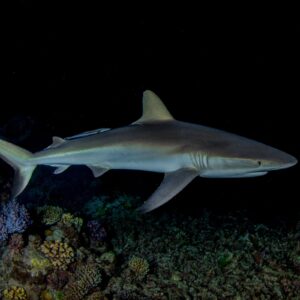
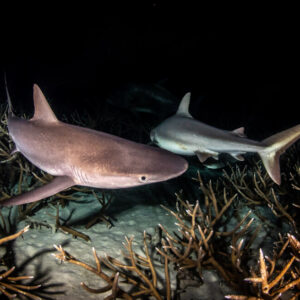
The bronze whaler (Carcharhinus brachyurus), also known as the copper shark or bronzie, is a large whaler shark that grows to about 3 metres long. Scientific guides describe it mainly as a shark of southern Australia, from about Moreton Bay in southern Queensland around the coast to Shark Bay in Western Australia, including northern Tasmania, and note that it may range further along the Queensland coast. On the Great Barrier Reef, divers regularly see bronze whalers on night dives at Norman Reef, off Cairns.


About the Bronze Whaler
Bronze whalers are named for their bronze colouring. They are found in warm-temperate waters around the world. In Australia they live in shallow coastal waters, bays, harbours and surf beaches, from the shoreline down to about 100 metres.
They are large predators that feed on fish living near the bottom and in open water, as well as squid, octopus and crustaceans.
Bronze Whalers on Night Dives at Norman Reef
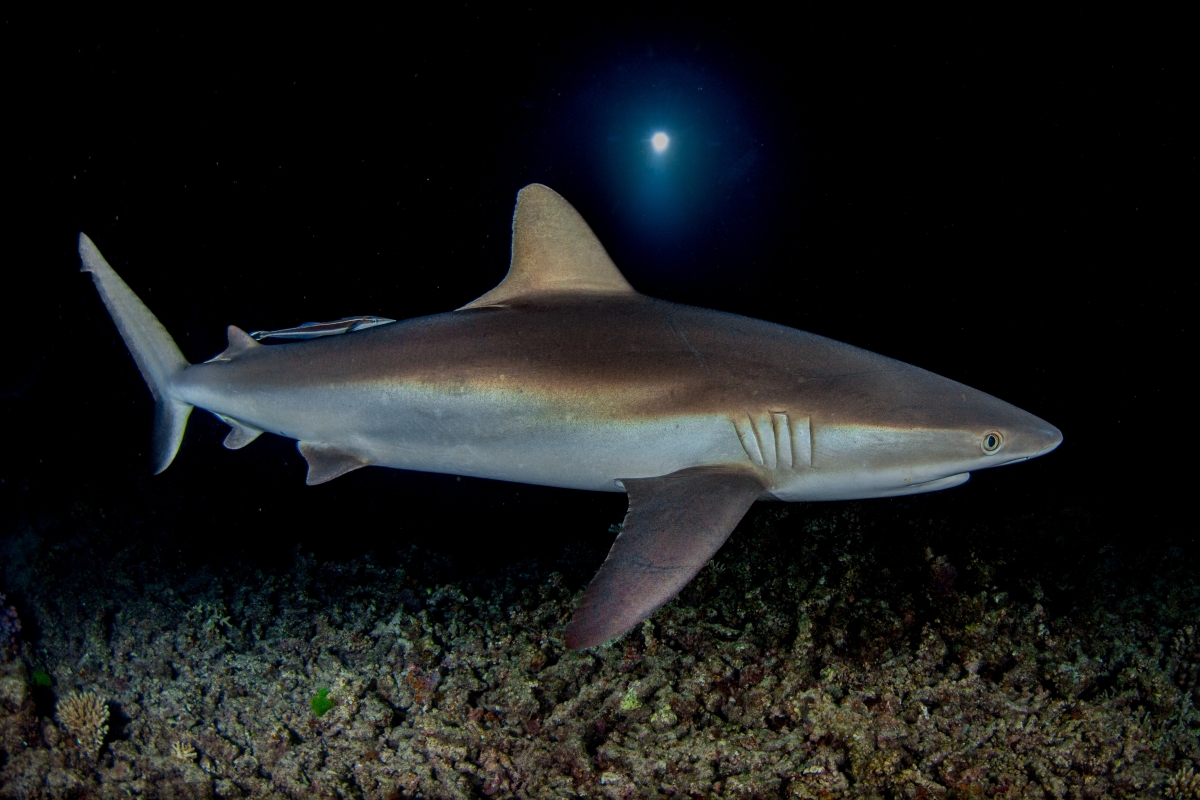
Divers regularly see bronze whalers on night dives at Norman Reef, an outer reef off Cairns. The photos on this page were taken on night dives there. Whaler sharks look very alike, especially at night, so not every large whaler seen on the reef is a bronze whaler. Signs to look for are a bronze sheen along the back and fins without obvious black or white tips.
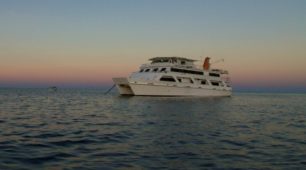
The Ocean Quest 2 Day Liveaboard and Ocean Quest 4 Day Liveaboard visit Norman, Saxon and Hastings Reefs and offer optional night dives for certified divers. Sightings are never guaranteed.

Quick Facts About the Bronze Whaler
- Scientific name: Carcharhinus brachyurus
- Also known as: copper shark, bronzie
- Found in: mainly southern Australia, from about Moreton Bay (Qld) to Shark Bay (WA), including northern Tasmania, and possibly further along the Queensland coast; coastal waters from 0 to 100 m deep. Seen on night dives at Norman Reef on the Great Barrier Reef
- Diet: fish, squid, octopus and crustaceans
- Size: up to about 3 m
- Best chance of sighting: night dives at Norman Reef, off Cairns; also southern Australian coasts, such as New South Wales, South Australia and south-western Western Australia
Scientific Classification
- Kingdom: Animalia
- Phylum: Chordata
- Class: Chondrichthyes (sharks and rays)
- Order: Carcharhiniformes (ground sharks)
- Family: Carcharhinidae (whaler sharks)
- Genus: Carcharhinus
- Species: Carcharhinus brachyurus
- Conservation status: Vulnerable (IUCN, 2020). Caught in some Australian fisheries; not a protected species
Whaler Sharks You Can See on the Great Barrier Reef
“Whaler” is a common name for a large family of sharks. The whalers most often seen by snorkellers and divers on the Great Barrier Reef are the grey reef shark and the blacktip reef shark. Sightings are never guaranteed. See our Great Barrier Reef sharks guide for more.


Bronze Whalers and Reef Safety
Bronze whalers are not usually aggressive, but they are large sharks rated as potentially dangerous to people, and they have been involved in bites. If you meet any large shark in the water, stay calm, avoid sudden movements and keep the shark in view while slowly moving back to the boat or shore.
For comprehensive shark safety information, visit our Reef Safety Hub.
A Hot Getaways destination. Where Care is Our Compass.
Learning about reef animals in class? We help schools, universities and study groups plan educational trips to the Great Barrier Reef. Depending on the program, groups can enjoy guided snorkelling and marine biology presentations.
Great Barrier Reef Educational Groups →
FAQs
What is a bronze whaler shark?
Are bronze whaler sharks dangerous?
How big do bronze whalers get?
Where are bronze whalers found in Australia?
Are bronze whalers found on the Great Barrier Reef?
What is the conservation status of the bronze whaler?
