
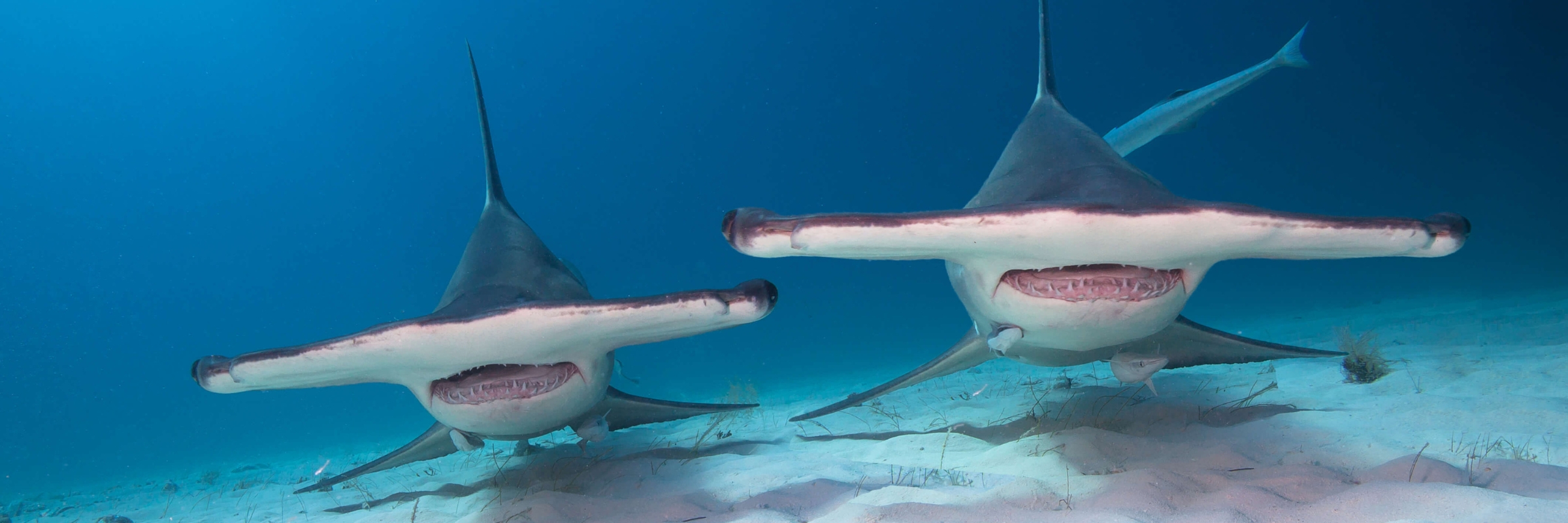
“The hammerhead is one of the ocean’s most distinctive silhouettes — and seeing one on the Great Barrier Reef is a dive experience you don’t forget.”
Hammerhead Sharks – The Great Barrier Reef’s Most Distinctive Shark
Hammerhead Shark: The Ultimate Guide
Hammerhead Shark
- Unique T-Shaped Head – Hammerhead sharks have a distinctive wide, flat head (called a cephalofoil) that gives them excellent vision and helps them detect prey more efficiently.
- Occasionally Seen on the Great Barrier Reef – While not as common as reef sharks, hammerheads are occasionally seen by divers on outer reef sites and in deeper water around Coral Sea reefs such as Osprey Reef and Holmes Reef (reached on liveaboard trips).
- Wide Field of Vision – Their wide-set eyes give them an unusually wide view of their surroundings, especially above and below.
- Powerful and Agile Swimmers—Hammerheads glide effortlessly through the water, using their unique head shape for precise movements and quick turns.
- Varied Diet – These sharks enjoy a menu of small fish, squid, crustaceans, and even stingrays, which they hunt with enhanced sensory abilities.
- A Thrill for Divers—While generally shy around humans, lucky scuba divers exploring deep reef walls might glimpse these majestic, slow-cruising sharks in the blue.
- About Ten Species Worldwide – The great hammerhead is the largest, reaching up to about 6 metres, though most are under 4.5 metres.
Discovering the Great Hammerhead Shark
The Great Barrier Reef is home to many fascinating marine creatures, including the hammerhead shark. They are known for their distinctive head shape and impressive hunting skills. Hammerhead sharks are an uncommon but memorable sighting for divers and snorkellers in the Great Barrier Reef. This article will explore this majestic predator’s physical characteristics, behaviour, habitat, and conservation status.

Physical Characteristics
These fascinating sharks are known for their distinctive head shape, which resembles a hammer, and they are a thrilling sight to behold.
They are unusual not only in appearance but also in behaviour. Scalloped hammerheads can gather in schools in some parts of the world, while great hammerheads are usually seen alone. These graceful predators are found in warm coastal and offshore waters, including the Great Barrier Reef and the Coral Sea, where they hunt for various prey, including fish, squid, and rays.
What sets hammerhead sharks apart is their incredible sensory adaptations. Their wide-set eyes give them a panoramic view of their surroundings, while specialised electroreceptors called ampullae of Lorenzini allow them to detect the electrical signals generated by the movements of potential prey.
Balancing the Marine ecosystems
Hammerhead sharks are important predators, especially of stingrays and other rays, which they can find buried in the sand using the electroreceptors in their wide heads.
Habitat and Distribution
Hammerhead sharks inhabit warm waters worldwide, including the Great Barrier Reef. Although found in deeper waters, they can also be spotted in shallower areas.
They prefer areas with rocky reefs, coral reefs, and sandy areas.
The Coral Sea is ideal for encountering hammerhead sharks, especially if you’re an experienced diver. There are several dive sites in the region where you can observe these majestic creatures in their natural habitat. Popular locations include the Ribbon Reefs on the outer Great Barrier Reef and Osprey Reef in the Coral Sea, where you can descend into the depths and witness the beauty of the underwater world.
Behaviour
Because of their distinctive head shape, hammerhead sharks are renowned for their impressive hunting abilities. They are opportunistic feeders, consuming diverse prey like fish, crustaceans, and squid. Scalloped hammerheads can form large schools around offshore seamounts in some parts of the world, but on the Great Barrier Reef hammerheads are usually seen alone or in small numbers. Hammerheads are usually wary of divers and swim away. Keep your distance and let them pass.
Hammerheads of the Great Barrier Reef
- Scalloped hammerhead (Sphyrna lewini) – up to about 4.3 m; Critically Endangered (IUCN, 2018 assessment)
- Great hammerhead (Sphyrna mokarran) – the largest, up to about 6 m but rarely over 4.5 m; Critically Endangered (IUCN)
- Winghead shark (Eusphyra blochii) – a small hammerhead with very wide, thin head lobes, found inshore in northern waters south to about Ingham
Quick Facts About Hammerhead Sharks
- Found in: coastal and offshore waters of the Great Barrier Reef and Coral Sea, from the surface to about 300 m
- Diet: fish, stingrays and other rays, squid and crustaceans
- Best chance of sighting: uncommon; most likely on liveaboard dive trips to outer and Coral Sea reefs
Scientific Classification
- Kingdom: Animalia
- Phylum: Chordata
- Class: Chondrichthyes (sharks and rays)
- Order: Carcharhiniformes
- Family: Sphyrnidae (hammerhead sharks)
- Genus: Sphyrna (and Eusphyra for the winghead)
Identification Notes
The great hammerhead has an almost straight front edge to its head and a very tall, sickle-shaped first dorsal fin. The scalloped hammerhead’s head is curved, with a notch in the centre.
Learning about reef animals in class? We help schools, universities and study groups plan educational trips to the Great Barrier Reef. Depending on the program, groups can enjoy guided snorkelling and marine biology presentations.
Great Barrier Reef Educational Groups →
Threats and Conservation
The International Union for Conservation of Nature (IUCN) lists the great and scalloped hammerheads as Critically Endangered. The main threat is fishing, including for their fins.
The Great Barrier Reef Marine Park Authority protects hammerheads from fishing in the Marine Park’s green zones, and the scalloped hammerhead is listed as Conservation Dependent under Australia’s national environment law. Occasionally caught as bycatch in commercial fisheries, their fins are in high demand for use in shark fin soup.
Hammerhead Sharks – Frequently Asked Questions and Answers
Are hammerhead sharks dangerous to humans?
How can I spot a hammerhead shark while snorkelling or diving in the Great Barrier Reef?
What can I do to help protect hammerhead sharks?
Why are Hammerhead sharks at risk?
Are Hammerhead sharks social creatures?
Conclusion
Hammerhead sharks are among the Great Barrier Reef’s most iconic and majestic predators. Their unique head shape and impressive hunting skills make them a memorable sighting for divers. By learning about their behaviour, habitat, and conservation status, we can help protect this species and ensure it continues to thrive in the wild. With responsible tourism practices and conservation efforts, we can help preserve the beauty and diversity of the Great Barrier Reef for generations to come.
Book A Liveaboard Trip to see Hammerhead Sharks


A Hot Getaways destination. Where Care is Our Compass.