“The leatherback sea turtle is the world’s largest turtle and one of the ocean’s great long-distance travellers. Seeing one in Australian waters is a profound privilege.”
Leatherback Sea Turtle – The World’s Largest Turtle
Leatherback Sea Turtle: The Largest Sea Turtle
Leatherback Sea Turtle – 7 Fascinating Facts
- Largest of all sea turtles – Leatherbacks can weigh up to about 900 kilograms, with a shell up to about 1.6 metres long, making them the ocean’s heavyweight champions.
- Global travellers – These ancient mariners undertake some of the longest migrations of any marine species, crossing entire oceans between feeding and nesting grounds.
- Unique soft shell – Unlike other sea turtles, leatherbacks have a flexible, leathery shell made of cartilage and oily skin, helping them dive to extreme depths.
- Deep divers – They can dive over 1,000 metres deep and tolerate colder water, thanks to a layer of insulating fat and their large size.
- Jellyfish lovers – Their diet consists mainly of jellyfish, which they slurp up with precision thanks to backward-facing spines in their throat.
- Rare but possible on the Reef – Leatherbacks aren’t commonly seen on the Great Barrier Reef, but they do occasionally pass through its waters during migration.
- Endangered in Australia – Listed as Vulnerable globally, Critically Endangered in the western Pacific and Endangered in Australia, leatherbacks are threatened by plastic pollution, fishing nets and habitat loss.
Discover Leatherback Sea Turtle
Discover the fascinating world of the Leatherback sea turtle, its unique features, behaviours, and conservation efforts to protect this incredible species.
They are the largest of all sea turtles. These fascinating creatures’ distinctive features and behaviours set them apart from other sea turtles. Unfortunately, they face numerous wild threats, including habitat destruction, pollution, and accidental capture in fishing nets. In this article, we will explore the world of the Leatherback sea turtle, including its physical characteristics, behaviour, and conservation efforts.
Quick Facts About the Leatherback Turtle
- Scientific name: Dermochelys coriacea
- Found in: oceans worldwide, mostly in the open ocean; in Australia it mostly feeds in subtropical and temperate waters off Queensland, New South Wales, Victoria, Tasmania and Western Australia
- Diet: mainly jellyfish and other soft-bodied animals
- Size: the largest living turtle; shell up to about 1.6 m; adults weigh about 250 to 900 kg
- Nesting in Australia: very rare; none recorded on the Queensland coast since 1996, with occasional records in the Northern Territory
- Best chance of sighting: not a realistic sighting on Great Barrier Reef tours; leatherbacks pass through reef waters only occasionally
Scientific Classification
- Kingdom: Animalia
- Phylum: Chordata
- Class: Reptilia
- Order: Testudines
- Family: Dermochelyidae (the leatherback is its only living member)
- Genus: Dermochelys
- Species: Dermochelys coriacea
- Conservation status: Endangered in Australia (EPBC Act and Queensland Nature Conservation Act). Vulnerable globally (IUCN, 2013); the western Pacific population is Critically Endangered
Habitat and Distribution
Found in oceans all around the world. They are a pelagic species, which means they spend most of their lives in the open ocean. These turtles can dive deeper than 1,000 metres, making them one of the deepest-diving marine animals.
- Found in oceans all around the world.
- They are a pelagic species and can dive deeper than 1,000 metres.
Physical Characteristics
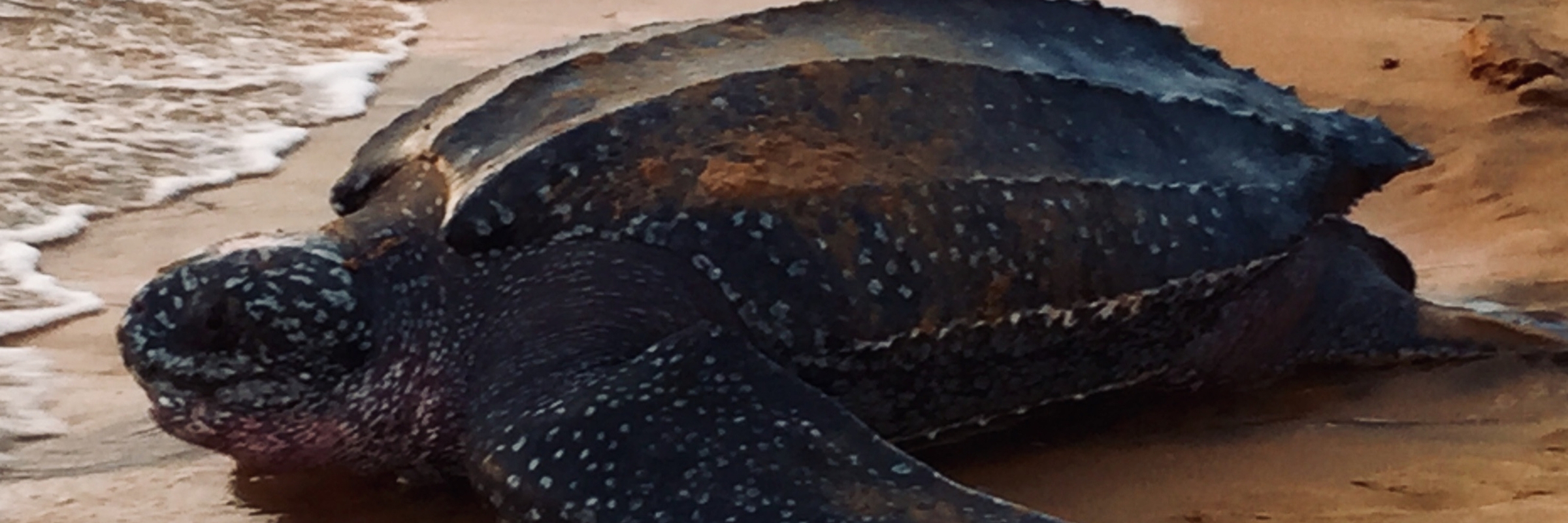
The Leatherback sea Turtle has unique physical characteristics that set it apart from other sea turtle species. They have a soft, leathery shell instead of a hard, bony shell like other turtles. Their shell is also covered in tough, rubbery skin instead of scales. Adults can weigh up to about 900 kg, with a shell up to about 1.6 metres long, making it the largest sea turtle species.
- With a soft, leathery shell and tough, rubbery skin.
- Adults can weigh up to about 900 kg.
Behaviour and Diet
Leatherback sea turtles are unique in their behaviour and diet. They feed mainly on jellyfish and other soft-bodied animals. Backward-facing spines in their throat help them hold and swallow slippery prey. Well known for their long migrations, travelling thousands of kilometres between their nesting and feeding grounds.
- They feed mainly on jellyfish.
- They travel thousands of kilometres between their nesting and feeding grounds.
Threats and Conservation
The International Union for Conservation of Nature (IUCN) currently classes Leatherback sea turtles as Vulnerable. They face numerous threats in the wild, including habitat destruction, pollution, and accidental capture in fishing nets. The western Pacific population, which includes turtles seen off Australia, is Critically Endangered, and in Australia the species is listed as Endangered.
- Listed as Vulnerable globally (IUCN, 2013) and Endangered in Australia.
- They face numerous threats in the wild, including habitat destruction, pollution, and accidental capture in fishing nets.
Conservation Efforts
Conservation efforts are underway to protect the Leatherback sea turtle, including the following:
- Protected areas: Marine protected areas have been established to safeguard the habitats. These areas restrict human activities that could harm the turtles and their environments, such as fishing and development.
- Nesting beach conservation: Conservation efforts include beach cleanups, erosion control, and monitoring to ensure the safety and health of nesting beaches.
- Turtle-friendly fishing gear: To reduce accidental capture in fishing nets, turtle-friendly fishing gear is being developed and promoted to fishermen worldwide.
- Public education and awareness: Educating the public about protecting their habitats is essential in promoting conservation efforts. This education includes raising awareness of threats and providing information on reducing human impacts on their habitats.
By implementing these conservation efforts, we can protect sea turtles and ensure their survival for future generations.
Related Species
Sea turtles you are more likely to see on the Great Barrier Reef include the green turtle, the hawksbill turtle and the loggerhead turtle.
Learning about reef animals in class? We help schools, universities and study groups plan educational trips to the Great Barrier Reef. Depending on the program, groups can enjoy guided snorkelling and marine biology presentations.
Great Barrier Reef Educational Groups →
Frequently Asked Questions
Are leatherback sea turtles found on the Great Barrier Reef?
How can I identify a leatherback sea turtle?
What do leatherbacks eat?
Why are leatherback sea turtles endangered?
Can I swim with a leatherback turtle on a reef tour?
Interesting Facts
The Leatherback sea turtle is a fascinating creature with many interesting facts. Here are some of the most notable facts about these unique turtles:
Largest of all sea turtles
Leatherback sea turtles are the largest of all sea turtle species, with adults weighing up to about 900 kg.
Softshell
Unlike other Turtle species, the Leatherback sea turtle has a soft, leathery shell covered in tough, rubbery skin instead of scales.
Unique diet
They feed mainly on jellyfish and other soft-bodied animals. Backward-facing spines in their throat help them hold and swallow slippery prey.
Deep divers
Leatherback sea turtles can dive deeper than 1,000 metres, making them one of the deepest diving marine animals.
Long migrations
They are known for their long migrations, travelling thousands of kilometres between their nesting and feeding grounds.
Endangered species
The International Union for Conservation of Nature (IUCN) currently classes them as Vulnerable globally. The western Pacific population is Critically Endangered, and in Australia the species is listed as Endangered. They face numerous threats in the wild, including habitat destruction, pollution, and accidental capture in fishing nets.
Lifespan
Their lifespan is not known.
Nesting behaviour
Females generally return to nest in the region where they hatched, and lay several clutches of eggs during the nesting season. In Australia nesting is very rare, and none has been recorded on the Queensland coast since 1996.
We must work together to preserve the health of our marine ecosystems and protect the unique creatures that call them home.
Explore the Great Barrier Reef Tours


A Hot Getaways destination. Where Care is Our Compass.