

“Few moments in nature are as moving as watching turtle hatchlings take their first steps toward the sea — tiny, determined, and ancient.”
The Great Journey Begins: Sea Turtle Hatchlings on the Reef
Every summer, along the beaches of the Great Barrier Reef and Queensland’s island coastlines, one of nature’s most extraordinary events unfolds quietly beneath the sand. Female sea turtles return to nest in the region where they hatched — sometimes after journeys of thousands of kilometres — to lay their eggs in the warm sand above the high-tide line. Weeks later, the hatchlings emerge and make their urgent dash to the sea. It is a moment that connects the present to a timeline 100 million years old.


How Sea Turtle Hatchlings Emerge
Sea turtle eggs incubate for approximately 60 days, depending on species and sand temperature. Temperature during incubation also determines the sex of the hatchlings — warmer nests produce more females, a fact of increasing concern as climate change warms beach environments. When incubation is complete, the hatchlings begin to stir simultaneously within the egg chamber, using a small egg tooth to break free of their shells. The coordinated movement of up to 100 or more hatchlings working through the sand column creates enough heat and movement to bring the group up toward the surface together.
The Race to the Ocean
Hatchlings typically emerge at night, heading towards the brightest horizon, which is usually over the sea. They move quickly — by turtle standards — across the sand and into the surf. The journey, which may cover only 50 metres, is one of the most perilous of their lives. Seabirds, ghost crabs, and other predators take many hatchlings before they reach the water. Those that make it into the ocean face further predation in the days that follow. An often-quoted estimate is that only about one in every thousand hatchlings survives to adulthood — which makes each individual turtle an extraordinary statistic of persistence.


Key Nesting Sites at the Great Barrier Reef
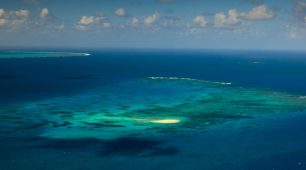
Some of the most important sea turtle nesting sites on the Great Barrier Reef include Raine Island in the far north — where tens of thousands of green sea turtles can nest in a single season, making it the largest green turtle rookery in the world. Mon Repos near Bundaberg is one of the most accessible mainland nesting sites, with guided hatchling viewing experiences offered during summer. Lady Elliot Island, Heron Island, and Milman Island are also significant nesting locations for multiple turtle species.
How Visitors Can Help
If you are fortunate enough to witness turtle hatchlings emerging on a beach, there are simple ways to ensure your presence does not cause harm. Keep lighting minimal — even torch light can disorient hatchlings. Maintain a respectful distance and do not touch or interfere with hatchlings. Never block their path to the ocean or use flash photography. Guided viewing experiences through organisations like Mon Repos Turtle Centre provide the safest and most educational way to witness this event.
Learning about reef animals in class? We help schools, universities and study groups plan educational trips to the Great Barrier Reef. Depending on the program, groups can enjoy guided snorkelling and marine biology presentations.
Great Barrier Reef Educational Groups →
A Hot Getaways destination. Where Care is Our Compass.
FAQs
When do turtle hatchlings emerge on the Great Barrier Reef?
How long do turtle eggs take to hatch?
Does temperature affect turtle hatchlings?
Why do hatchlings head straight to the sea?
How can I help protect turtle hatchlings?