
“Each winter, mainly in June and July, dwarf minke whales visit the Ribbon Reefs and often approach snorkellers with a curiosity that’s genuinely mutual. It’s one of the world’s most extraordinary wildlife encounters.”
Swim with Dwarf Minke Whales – The Complete Guide to This Unique Experience
Explore Great Barrier Reef Marine Mammals
A Rare Encounter on the Northern Great Barrier Reef
Few wildlife encounters on Earth compare to swimming alongside a curious dwarf minke whale on the Great Barrier Reef.
Every winter, these remarkable whales gather around the remote Ribbon Reefs off Tropical North Queensland, creating one of the world’s rarest marine wildlife experiences. Unlike whale watching from a boat, dwarf minke whales are known for their inquisitive nature and will often approach swimmers, snorkellers and divers on their own terms.
Even more extraordinary, the northern Great Barrier Reef is home to the only known predictable gathering of dwarf minke whales in the world, and swimming with them is managed under a dedicated Reef Authority permit system and Code of Practice.
Whether you’re planning a dedicated whale expedition or hoping to add a once-in-a-lifetime encounter to your reef holiday, this guide explains everything you need to know about swimming with dwarf minke whales, including when to go, where to find them, and how to choose the right tour.
What Are Dwarf Minke Whales?
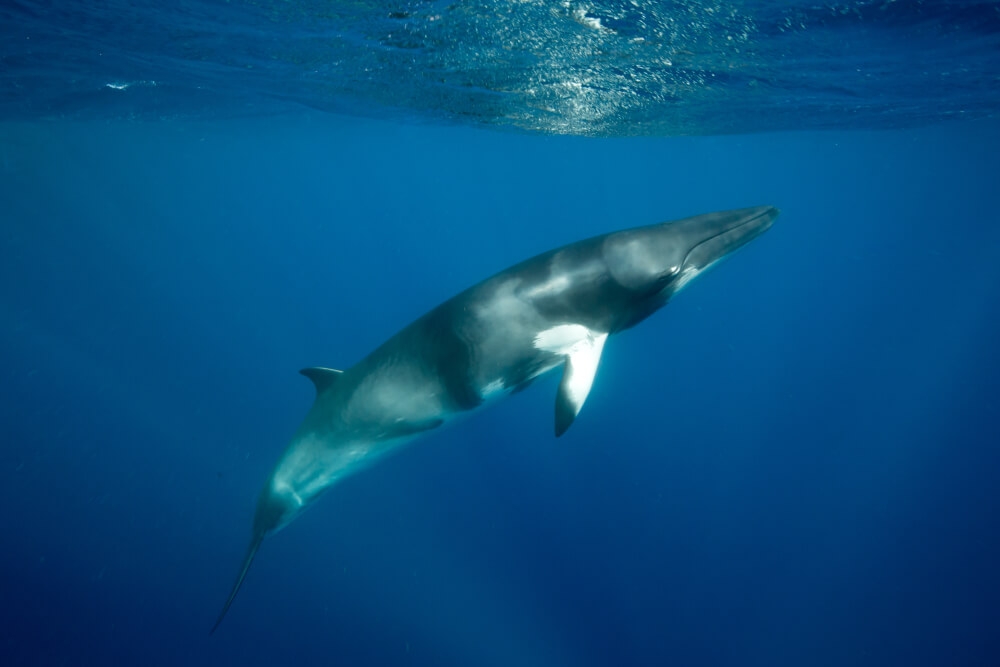
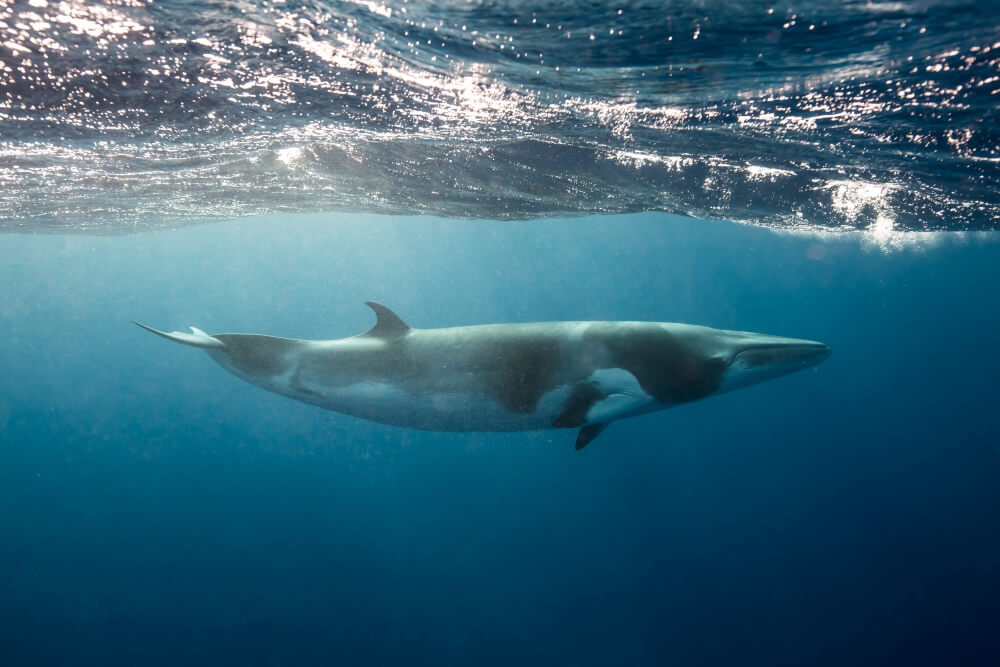
Dwarf minke whales are one of the smallest baleen whales. Adults grow to about 7 to 8 metres long, making them considerably smaller than humpback whales but still an impressive sight in the water.
Recognisable by their streamlined bodies, white shoulder markings and sleek appearance, dwarf minke whales remain one of the least understood whale species. Scientists continue to study their migration patterns, behaviour and population numbers, and much of what is known about them comes from long-term research on the Great Barrier Reef, including the Minke Whale Project led from James Cook University.
Quick Facts: Swimming with Dwarf Minke Whales
- Scientific name: Balaenoptera acutorostrata (the dwarf minke is an unnamed subspecies of the common minke whale)
- Where: the Ribbon Reefs on the northern Great Barrier Reef, north of Port Douglas towards Lizard Island
- When: mainly June and July
- Size: adults grow to about 7 to 8 metres
- Who can take you in the water: only operators whose Marine Parks permit allows swimming with whales
- Sightings: never guaranteed
Learn more about the species on our dwarf minke whale page.
Learning about reef animals in class? We help schools, universities and study groups plan educational trips to the Great Barrier Reef. Depending on the program, groups can enjoy guided snorkelling and marine biology presentations.
Great Barrier Reef Educational Groups →
Curious and Interactive by Nature
Unlike many whale species that prefer to keep their distance, dwarf minke whales are renowned for their curiosity.
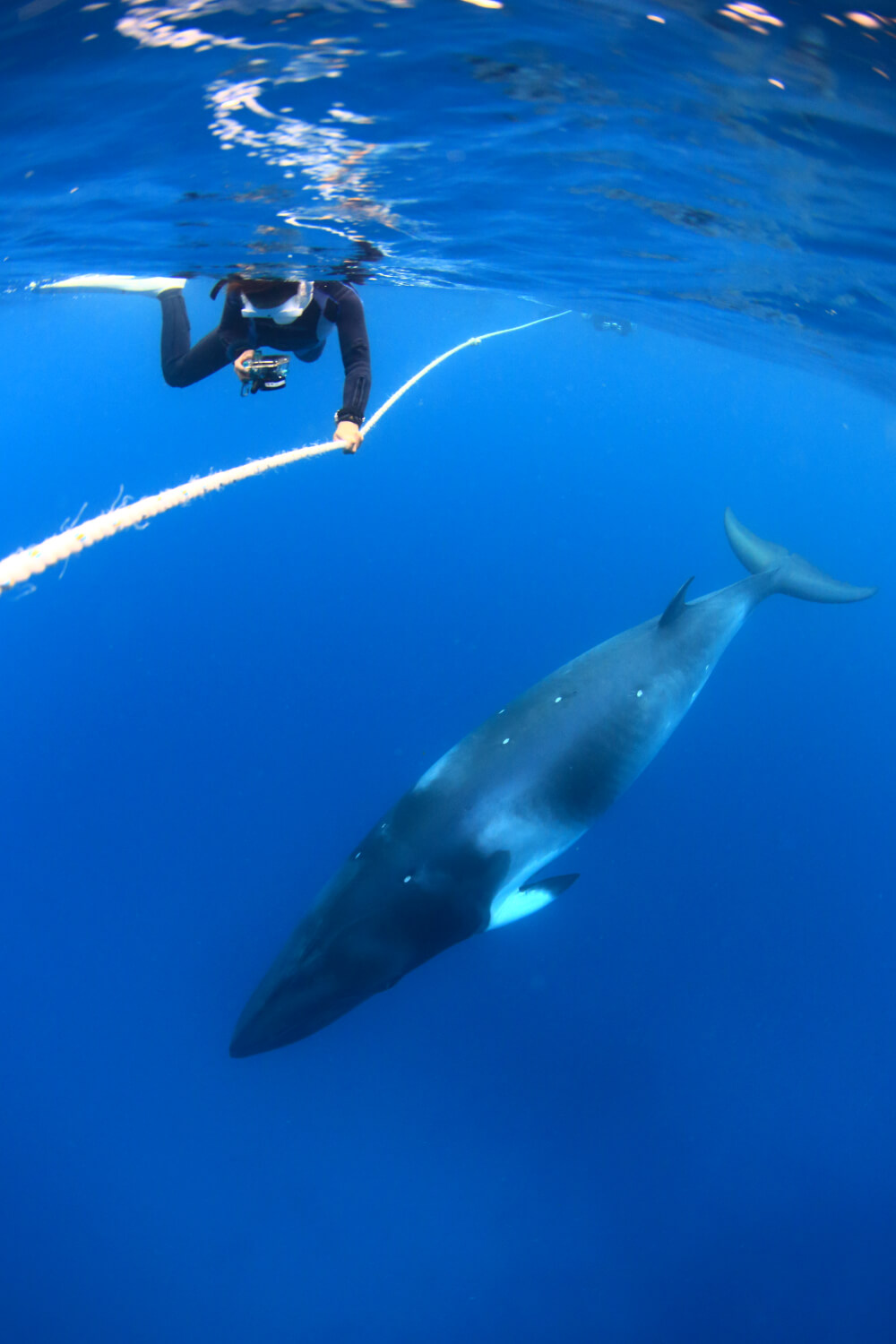
They frequently approach vessels, circle swimmers and investigate snorkellers holding onto specially designed rope lines. Encounters often last much longer than visitors expect, with whales sometimes returning repeatedly to observe people in the water.
Because the interaction is entirely voluntary for the whales, every encounter feels genuine and natural.
Why the Great Barrier Reef Is So Special for Dwarf Minke Whales
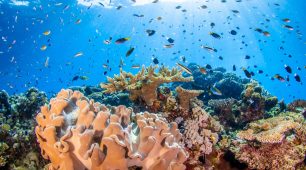
Each year, dwarf minke whales migrate through the northern Great Barrier Reef and congregate around the Ribbon Reefs, a chain of spectacular outer reefs on the edge of the continental shelf, stretching north from about Port Douglas towards Lizard Island.
Researchers believe these remote reefs provide important habitat during their migration, although many aspects of their behaviour remain a mystery.
What makes this region unique is the combination of:
-
- Clear tropical waters
- Remote offshore reef system
- Strict environmental management
- Licensed operators with specialised permits
- Decades of scientific observation
Together, these factors make the Ribbon Reefs a truly special place to swim with dwarf minke whales.
This rarity is one of the reasons marine biologists, underwater photographers and wildlife enthusiasts travel from across the globe to experience the Ribbon Reefs during whale season.
When Is Dwarf Minke Whale Season?
The dwarf minke whale season generally runs from June through July, with occasional sightings a little earlier or later. About 90% of sightings are in June and July.
Peak Season
The highest likelihood of encounters typically occurs during:
-
- June
- July
These cooler winter months coincide with the whales’ migration through the northern Great Barrier Reef.
Because these are wild animals, sightings can never be guaranteed. Some trips enjoy multiple encounters in a single day, while others may see whales briefly or not at all.
Choosing the right type of trip can significantly improve your chances.
Where Can You Swim with Dwarf Minke Whales?
Most encounters occur on the Ribbon Reefs between Cairns and Cooktown.
Visitors generally have two options:
Multi-Night Liveaboard Trips (Best Chance of Encounters)
For travellers specifically hoping to swim with dwarf minke whales, a liveaboard expedition offers the highest probability of success.
Multi-day trips spend extended time on the Ribbon Reefs, allowing crews to search for whale activity and maximise opportunities when whales are present.
Benefits include:
-
- More time at remote whale locations
- Multiple days on the reef
- Greater flexibility around weather conditions
- Additional diving and snorkelling opportunities
- Access to outer reef sites rarely visited by day boats
For travellers serious about the experience, exploring multi-night liveaboard trips to the Ribbon Reefs is usually the best option.
Day Trips from Port Douglas
Some reef tours departing Port Douglas operate during minke whale season and may encounter whales while visiting outer reef sites.
These trips are ideal for travellers who:
-
- Have limited time
- Prefer not to spend multiple nights at sea
- Want a general reef experience with the possibility of whale sightings
It’s important to understand that whale encounters on day trips should be viewed as a bonus rather than the primary purpose of the excursion.
Only a small number of operators hold the permits required for in-water whale interactions.
Visitors looking for day tours from Port Douglas with whale-swim permits should book well in advance, particularly during peak season.
What Happens During a Dwarf Minke Whale Encounter?
One of the most common questions visitors ask is:
“What do you actually do in the water?”
The answer surprises many people.
The Rope-Line Technique
When whales are spotted, the vessel may deploy a floating rope system alongside the boat.
Participants enter the water wearing masks, snorkels and fins and hold onto the line while remaining calm and stationary.
Rather than chasing the whales, swimmers simply wait. Whales are never chased, and touching a whale is not allowed.
The whales then decide whether they want to approach.
This method:
-
- Minimises disturbance
- Protects the animals
- Creates safer interactions
- Allows natural behaviour to occur
Some whales may pass at a distance, while others swim remarkably close.
The most memorable encounters often happen when curious whales circle repeatedly around the group.
Do You Need to Be a Diver?
No.
Most whale interactions occur while snorkelling.
Many participants are not certified divers, and first-time snorkellers regularly enjoy successful encounters.
If you are comfortable in the water and able to follow crew instructions, snorkelling is usually sufficient.
Is Swimming with Dwarf Minke Whales Safe?
Yes, when you go with an operator that holds a Reef Authority swimming-with-whales permit and follows the Code of Practice. Swimmers stay on surface lines, never chase or touch the whales, and the crew manages the encounter.
These encounters have been carefully managed for many years using strict environmental guidelines designed to protect both people and whales.
Professional crews monitor:
-
- Whale behaviour
- Water conditions
- Participant safety
- Interaction distances
- Time spent in the water
Because dwarf minke whales are wild animals, all encounters remain unpredictable, but they have developed a reputation as gentle and inquisitive visitors to the Ribbon Reefs.
How to Choose the Right Dwarf Minke Whale Tour
Not every reef trip is designed around whale encounters.
When comparing options, consider:
Choose a Liveaboard If You:
-
- Specifically want to swim with dwarf minke whales
- Are travelling during peak season
- Want the highest likelihood of encounters
- Enjoy diving or extended reef experiences
Choose a Day Trip If You:
-
- Have limited time
- Prefer sleeping on land
- Want a broader Great Barrier Reef experience
- Are happy treating whale sightings as a bonus
Check for Whale Interaction Permits
This is one of the most important considerations.
A general reef permit does not automatically allow operators to conduct in-water whale interactions.
Always confirm that the operator holds the appropriate permits and follows approved interaction guidelines.
What Should You Bring?
Winter conditions on the Great Barrier Reef remain pleasant, but the water is cooler than summer.
Recommended items include:
-
- Swimsuit
- Reef-safe sunscreen
- Hat and sunglasses
- Towel
- Light jacket for boat travel
- Motion sickness medication if prone to seasickness
- Underwater camera (if permitted)
Most operators provide snorkelling equipment and exposure suits.
Frequently Asked Questions
Are dwarf minke whale sightings guaranteed?
What is the best month to swim with dwarf minke whales?
Can beginners participate?
Are dwarf minke whales dangerous?
Is a liveaboard better than a day trip?
What happens if no whales appear?
Ready to Experience One of the World’s Rarest Whale Encounters?
Swimming with dwarf minke whales is an extraordinary wildlife experience.
Centred on the northern Great Barrier Reef and available during a short seasonal window, these encounters combine adventure, conservation and genuine wonder in a way few marine experiences can match.
Whether you choose a multi-day expedition to the Ribbon Reefs or a reef adventure from Port Douglas during whale season, you’ll be participating in one of Australia’s most unique marine tourism experiences.
Explore our range of Great Barrier Reef tours, compare liveaboard options, and start planning your dwarf minke whale adventure today.
Explore Great Barrier Reef Tours

A Hot Getaways destination. Where Care is Our Compass.