

“The Whitsunday reefs are where the ocean shows off — and the ocean is very, very good at showing off.”
Into the Blue: The Reef Systems of the Whitsundays
The Whitsunday region of the Great Barrier Reef encompasses a remarkable range of reef environments — from the fringing reefs that grow along the shorelines of the islands themselves, to the spectacular outer reef structures that sit at the edge of the continental shelf in open ocean. This diversity makes the Whitsunday reef some of the most rewarding in the entire Great Barrier Reef system, with opportunities for snorkellers, divers, and visitors of every experience level.


Hardy Reef
Hardy Reef is the most frequently visited outer reef site in the Whitsundays and one of the most significant. It is a long, crescent-shaped reef structure approximately 60 kilometres from the mainland, accessible by fast catamaran on day tours from Airlie Beach. The reef pontoon at Hardy Reef provides a comfortable base for snorkelling, glass bottom boat rides, and diving. Immediately adjacent to Hardy Reef, the naturally heart-shaped coral formation of Heart Reef has become one of the most recognisable images in Australian tourism — visible only from the air on helicopter and scenic flight tours.
Knuckle Reef and Hook Reef
Knuckle Reef and Hook Reef are additional outer reef destinations in the Whitsunday group, offering excellent diving and snorkelling in sites that receive fewer visitors than Hardy Reef. Both feature impressive coral formations, good fish diversity, and the water clarity associated with the outer reef at depth. Some operators rotate between these reef sites depending on conditions and season, ensuring that the reef environment is not concentrated at a single point.
Fringing Reefs of the Whitsunday Islands
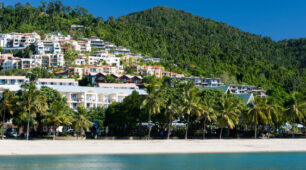
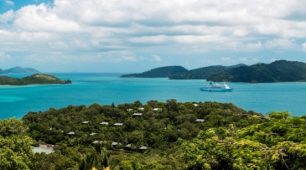
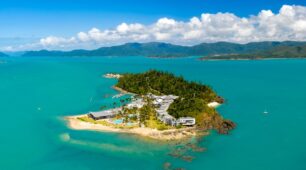
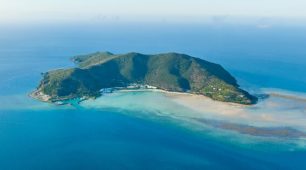
Beyond the outer reef, the islands themselves support extensive fringing reef communities in the sheltered waters between them. These inner reef environments are particularly accessible to snorkellers on sailing tours that anchor in island bays. Hook Island, in particular, has substantial fringing reef visible from the beach, and Nara Inlet on Hook Island is a renowned anchorage with excellent snorkelling conditions in adjacent reef areas.
The Outer Reef Wall
For certified divers on liveaboard vessels, the outer edge of the Whitsunday reef offers some remarkable wall diving opportunities. The outer reef slope drops away from the reef crest into deep blue water, with coral growth on the upper sections giving way to more open-water conditions below. Pelagic species including large rays, mackerel, and occasional whale shark are encountered in these deeper, more exposed sections of the reef system.
Reef Health in the Whitsundays
The Whitsunday reef has experienced some impact from bleaching events and cyclone damage in recent years, particularly in shallower sections of the fringing reef. However, outer reef sites at Hardy Reef and the deeper fringing reef communities continue to support healthy coral cover and diverse marine life. Reef monitoring programs conducted by research organisations and tour operators provide ongoing data on reef condition and recovery in the region.
A Hot Getaways destination. Where Care is Our Compass.
FAQs
Where are the Whitsunday reefs and how do I get there?
What is there to see at Hardy Reef and Heart Reef?
Are the Whitsunday reefs suitable for beginners?
Can I both snorkel and dive at the Whitsunday reefs?
What marine life might I see on the Whitsunday reefs?
